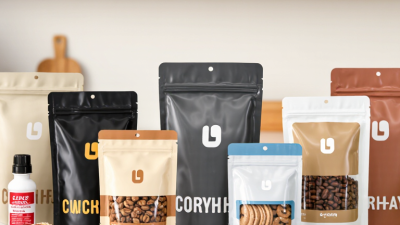
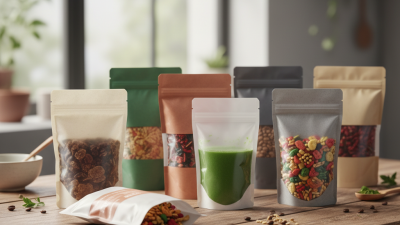
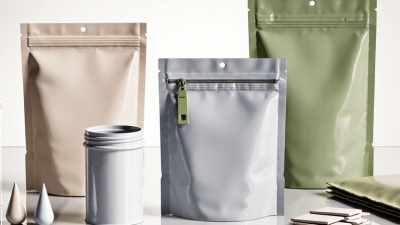
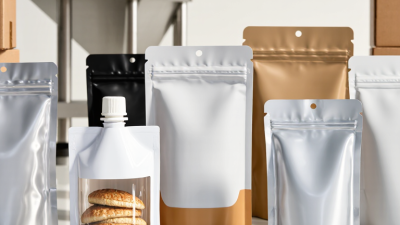
Finding the right partner for printed stand up pouches takes more than comparing prices. China has manufacturers serving food, beverage, personal care, and household brands, but capabilities vary widely. Some focus on flexible production runs; others offer deeper printing options or specialized barrier structures. Details matter. A pouch that looks sharp on screen may print differently, feel too flimsy, or fail to stand securely when filled.
This guide explores how to assess China’s leading manufacturers without treating a popularity list as proof of quality. Buyers should examine printing samples, material specifications, production controls, and experience with similar products. Ask how the supplier checks color consistency and seal strength. Request clear documentation for the intended packaging application, and confirm minimum order quantities, lead times, and customization limits before committing. A sample can still mislead. Testing a filled pouch under realistic storage and handling conditions gives a more useful picture.
Communication deserves attention, too. A responsive sales contact is helpful, but technical answers should be specific and consistent. Compare quotations carefully; a low price may exclude cylinders, testing, or shipping costs. Not every buyer needs the most elaborate finish, and that is easy to forget when reviewing polished catalogs. The right manufacturer is the one whose verified capabilities match your product, order size, timeline, and quality expectations. Use the following overview as a starting point, then confirm important claims directly with each supplier.
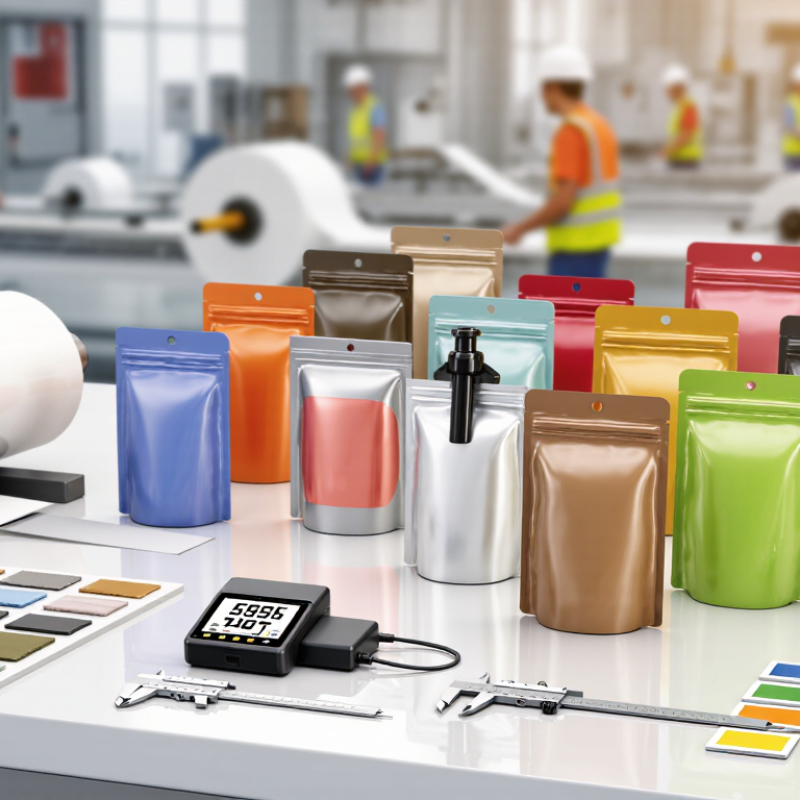
Printed stand-up pouches combine a flat bottom gusset with flexible film walls, allowing the pack to stand on a shelf. Their layered films balance print quality, stiffness, and protection from moisture or oxygen. A typical structure may use polyester for printing, a barrier layer, and polyethylene for heat sealing. The right structure depends on the product and filling conditions.
In China, production often starts with artwork checks and cylinder or plate preparation. Gravure printing suits long runs; flexographic printing can be practical for shorter runs. Printed film is laminated, then left to cure. It is slit into rolls before pouch machines form the bottom gusset and side seals. Zippers or spouts can be added. Small details matter.
The Flexible Packaging Association’s 2023 State of the U.S. Flexible Packaging Industry report recorded US$42.9 billion in U.S. industry sales for 2022, showing the scale of demand for flexible packs. That figure does not measure China’s output, though.
Buyers should request specifications and production samples, then review seal strength, print registration, and barrier performance. Ask how the supplier checks each batch. A glossy sample is not proof of consistent production; even good factories can have variation, so clear acceptance criteria help.

Printed stand-up pouches pair shelf visibility with a compact, flexible package. Their gusseted bottoms help them stand upright, while laminated layers can protect contents from moisture, oxygen, or light. The right barrier depends on the product, not just appearance. Resealable zippers suit snacks and dried foods; tear notches make single-use packs easier to open. These features also serve coffee, powdered mixes, pet treats, and household refills.
Tips: Match the film structure to the product’s sensitivity and expected shelf life. Check seal strength, zipper performance, and print legibility on filled samples. Small details matter.
Artwork can cover most of the pouch, making color accuracy and readable instructions important. Matte finishes reduce glare; glossy finishes can make colors look brighter. Neither is always better. Ask for samples and test them under actual storage and handling conditions. A pouch that looks sturdy on a screen may feel thin in hand, and print can sometimes obscure practical details such as fill level. That deserves a second look.
Evaluating Chinese stand-up pouch manufacturers takes more than comparing unit prices. Request a sample made with the same film structure, zipper, and dimensions as your intended order. Check whether the pouch stands upright when partly filled, and inspect the bottom gusset for creases or uneven sealing. Small details matter. A clean sample can still hide production variation, so ask how often seal strength and pouch dimensions are checked during a run.
Review the material specification, print proofing process, and quality records before approving production. Ask for measurable tolerances, test methods, and recent inspection reports—not only a general promise of quality. If the pouch will hold food, request relevant material documentation and confirm that it matches the exact structure being quoted. Also clarify minimum order quantities, lead times, and how rejected units are handled. A fast reply is useful, but clear answers to technical questions are better. That can be awkward. Compare responses from several suppliers, and note whether they flag limitations or simply agree to every request. No checklist removes all risk; an independent pre-shipment inspection may still be worthwhile, especially for a first order.
China’s Top Printed Stand-Up Pouch Manufacturers?
Notable Printed Stand-Up Pouch Manufacturers in China
China’s printed stand-up pouch suppliers range from specialized converters to large packaging plants. Their capabilities may include digital or gravure printing, zipper installation, and custom pouch sizing. A useful shortlist should focus on verifiable production details, not just polished product photos. Ask about print registration, seal strength testing, barrier materials, minimum order quantities, and production lead times. Small details matter.
A sample can look convincing, yet perform differently after filling or transport. Request samples made with the proposed materials and ask how each batch is checked. Reliable manufacturers should explain their quality procedures clearly and provide relevant material specifications and test documentation. Confirm that the pouch structure suits the product’s storage needs. Be cautious of vague answers. One weakness in supplier research is relying too heavily on price before comparing specifications.
Tips: Send artwork files, pouch dimensions, filling conditions, and expected order volume before requesting a quote. Ask for a printed proof and inspect color, text clarity, zipper alignment, and seals. Record agreed specifications in writing; memory is a poor quality-control system.
When comparing printed stand-up pouch manufacturers in China, look beyond a polished sample. Ask for the material structure, thickness, barrier data, and intended filling conditions. A pouch for dry snacks may need different protection from one holding oily or moisture-sensitive products. Details matter.
Request recent quality records and check how the factory handles color matching, print registration, sealing, and finished-pouch inspection. Ask for test methods, not just claims. A seal-strength result is more useful when you know the sample size and test conditions. Looks good. But appearance alone proves little. Request samples from a production run, then inspect the bottom gusset, zipper alignment, and seal edges under normal handling.
Confirm that specifications, tolerances, and acceptance criteria are written into the quotation or purchase documents. Clarify minimum order quantities, lead times, artwork approval steps, and how defects are reported. If the packaging will contact food, request relevant material documentation and verify that it fits your product and sales markets. Supplier answers may sound precise, yet a few points can remain vague. I would ask again before approving tooling or a large order, especially if test reports do not match the exact pouch structure being quoted.
| Evaluation Area | What Buyers Should Specify | Verification or Reference | Sourcing Consideration |
|---|---|---|---|
| Food-contact compliance | Identify the intended market, food type, filling temperature, and storage conditions. Request documentation for every layer, coating, adhesive, ink, and sealant that may affect compliance. | For the United States, applicable FDA food-contact regulations depend on the material and use. For the European Union, plastic food-contact materials are subject to Regulation (EU) No 10/2011 and applicable amendments. | Ask for a Declaration of Compliance or equivalent supporting documents relevant to the destination market and intended conditions of use. A general “food-grade” statement alone is not a complete compliance assessment. |
| Barrier performance | Set oxygen and water-vapor barrier requirements based on product sensitivity, shelf-life target, package size, and distribution environment. | ASTM D3985 is a method for measuring oxygen gas transmission through plastic film and sheeting. ASTM F1249 is a method for measuring water-vapor transmission through plastic film and sheeting. | Request results for the proposed laminate and agreed test conditions. Film-only data may not represent the finished pouch, especially at seals, folds, and closures. |
| Seal strength | Agree on the seal width, sealing conditions, acceptance criteria, and whether seals will be tested before or after distribution conditioning. | ASTM F88/F88M provides a method for measuring the strength of flexible-barrier-material seals. | Confirm that the test sample represents the finished pouch seal. Seal strength should be assessed alongside leak integrity and package-opening requirements. |
| Leak integrity | Define the type of leakage risk that matters for the product, such as seal channels, pinholes, or gross package leaks. | ASTM F1929 uses dye penetration to detect seal leaks in porous medical packaging materials. ASTM F2096 uses internal pressurization to detect gross leaks in packaging; method suitability depends on the package and application. | Choose a method suited to the pouch construction and product risk. Specify sampling frequency and acceptance criteria in the quality agreement. |
| Print quality and artwork control | Approve color references, artwork files, print repeat, text legibility, barcode requirements, and any required proofing process before production. | Use an approved signed or digitally controlled proof and a documented inspection procedure. Barcode verification requirements should match the buyer’s applicable retail or logistics specifications. | Confirm who is responsible for artwork preflight, color approval, version control, and disposal or control of obsolete printed material. |
| Laminate construction | Specify the layer structure, material types, thicknesses, surface treatment, adhesive system, and intended end use. | Request a technical data sheet and construction description for the proposed laminate. Any material change should be reviewed against compliance, barrier, sealing, and performance requirements. | Do not compare quotations on price alone if the quoted structures differ. Confirm whether the pouch is designed for ambient, refrigerated, frozen, or hot-fill use. |
| Pouch features and dimensions | Define finished width and height, bottom-gusset dimensions, zipper type, tear notch, spout if needed, and fill-volume or product-weight target. | Approve a production-representative sample and check fit, opening, filling, standing stability, and compatibility with the intended filling equipment. | Clarify dimensional tolerances and whether quoted dimensions refer to the finished pouch or the flat web. Confirm the required pouch orientation on filling lines. |
| Mechanical performance | Set requirements for handling, transport, puncture resistance, and any special conditions such as sharp-edged contents or cold-chain distribution. | ASTM D882 covers tensile properties of thin plastic sheeting. Additional tests should be selected according to the package design and actual distribution risks. | Request testing on representative finished packaging where practical. A single film-strength result does not establish complete-package performance. |
| Quality documentation and traceability | Agree on lot identification, inspection records, change notification, nonconformance handling, and document retention. | Review the supplier’s quality procedures and request relevant batch records, inspection results, and material traceability information for the order. | Put specifications, approved samples, test methods, tolerances, and change-control expectations into the purchase agreement or quality agreement. |
| Samples, tooling, and commercial terms | Request a sample stage that matches the intended construction and printing method, and clarify setup charges, tooling ownership, minimum order quantity, and repeat-order conditions. | Use written quotations and approved samples to document the agreed construction, artwork, dimensions, and commercial assumptions. | Compare suppliers using the same specification and delivery assumptions. Confirm production capacity and lead time directly for the required order rather than relying on generic estimates. |
| Recyclability and end-of-life claims | State the target market and desired disposal route before choosing a laminate or adding barrier layers, zippers, coatings, or other components. | Evaluate the complete finished package against the relevant local collection, sorting, and recycling guidance. Recyclability depends on package structure and available infrastructure. | Request evidence for any environmental claim and check that the wording is appropriate for the destination market. Avoid assuming that a pouch is recyclable based only on one layer or material. |
Interested in working with our team? Reach out to our team for a no-strings-attached consultation.
1 (833) PPC-FLEX
1111 Busch Pkwy
Buffalo Grove, IL 60089, USA