1111 Busch Pkwy, Buffalo Grove, IL 60089, USA

1 (833) PPC-FLEX

10 Tips for Buying Stand Up Pouches?

Stand up pouches have moved from a niche format to a serious packaging choice across food, pet care, personal care, and household products. Grand View Research valued the global stand-up pouches market at approximately USD 40.89 billion in 2023 and projects continued growth through 2030. That expansion reflects practical benefits: lower material use, efficient shelf display, and convenient resealing. Yet market growth does not guarantee a suitable pouch for every product.

Buying decisions should begin with product behavior, not appearance. A coffee pouch may need high oxygen and moisture protection. A sauce pouch may require stronger seals and controlled filling conditions. A dry snack needs puncture resistance when cartons move across warehouses. Smithers’ flexible packaging research highlights the growing importance of barrier performance, downgauging, and improved sustainability claims. These priorities often conflict. A thinner structure may reduce material use, but it can also increase production failures.

This guide presents ten practical tips for buying stand up pouches with greater confidence. It considers film structure, zipper quality, spout design, print accuracy, minimum order quantities, and supplier verification. Samples should be tested on the actual filling line, not only examined by hand. Check seal strength after storage, transport, and temperature changes. Small details matter.

A pouch can look perfect and still fail. That deserves attention.

Data from the Flexible Packaging Association and sustainability guidance from the Sustainable Packaging Coalition also show why recyclability claims require careful wording. Packaging decisions should balance cost, protection, user experience, compliance, and end-of-life realities. No report replaces real testing, but reliable industry evidence can help buyers ask sharper questions.
10 Tips for Buying Stand Up Pouches?

Define Your Product’s Packaging Requirements

When buying stand up pouches, define your product’s packaging requirements before comparing prices. A pouch for oily snacks needs strong seals and grease resistance. Powdered products need controlled filling and reliable dust protection. Liquid products require leak-resistant construction and careful drop testing. Product weight matters too. A 100-gram pouch behaves differently from a one-kilogram pouch.

Describe the product’s texture, moisture level, aroma, and shelf-life target. These details guide the film structure and barrier level. Light-sensitive products may need protection from ultraviolet exposure. Fresh products may require oxygen control or a resealable zipper. Choose the pouch shape after checking filling equipment, storage space, and display conditions. A wide base improves stability, but it can reduce packing efficiency. Small details matter.

Do not judge quality from appearance alone. Request samples and test seals after filling. Squeeze them, stack them, and simulate transport. Check whether the zipper remains clean after repeated use. Review material specifications, food-contact suitability, recycling information, and applicable market requirements. Sustainability claims also need evidence. They are easy to overstate. A lower-material pouch may still perform poorly if it causes product waste. Packaging decisions should balance protection, usability, cost, and realistic disposal options. Allow room for revision. The first specification is rarely perfect.
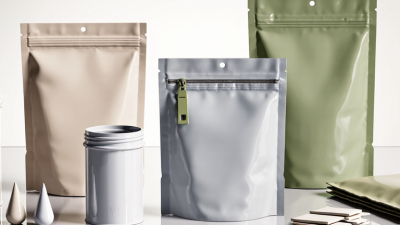
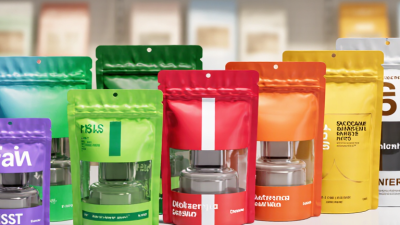
10 Tips for Buying Stand Up Pouches: Define Your Product’s Packaging Requirements

This chart ranks the main requirements to define before purchasing stand-up pouches, using a practical priority scale from 1 to 5. Barrier performance, seal integrity, and puncture resistance are especially important for protecting product quality, while resealability, appearance, and transparency depend on the product category and user experience goals.

Choose the Right Pouch Material and Barrier Properties

10 Tips for Buying Stand Up Pouches

Choose the Right Pouch Material and Barrier Properties

Start with the product, not the pouch appearance. Dry snacks usually need moisture protection, while roasted foods may need oxygen and light barriers. Powdered products also require strong seals because fine particles can weaken closure areas. For oily contents, choose an inner layer that resists grease and prevents flavor transfer. A polyethylene sealing layer often supports reliable heat sealing, but its performance depends on thickness and processing conditions.

Ask suppliers for barrier data, including oxygen transmission rate and water vapor transmission rate. Lower values usually indicate stronger protection. Check testing conditions, because different laboratories may use different temperatures and humidity levels. For light-sensitive products, consider a metallized or foil-based structure. Clear films can work when visibility matters more than maximum light protection. Do not choose the thickest pouch automatically. Excess material may increase cost without improving shelf life.

Inspect the zipper, spout, gusset, and seal width together. A good barrier cannot compensate for a weak closure. Request samples filled with the real product, then test them after transport, stacking, and storage. Look for swelling, leaks, odor changes, or brittle corners. I have found that laboratory results do not always predict warehouse behavior. That gap deserves attention. Recheck the pouch after several days, not only immediately after filling. Supplier certificates, migration statements, and batch records can support a more reliable purchase decision.

Select the Appropriate Size, Shape, and Closure

Choosing the right stand-up pouch starts with the product, not the artwork. Measure the fill weight, density, headspace, and serving format. A 250-gram snack may need more room than 250 grams of powder. Leave enough headspace for sealing and shelf presentation. Too much empty space wastes film and makes the pouch collapse.

Grand View Research reports that the global stand-up pouches market was valued at approximately USD 39 billion in 2023. This scale makes size accuracy commercially important. Select a narrow pouch for controlled pouring and a wider pouch for easy scooping. Rounded corners improve handling, while a flat bottom can increase stability. Test the filled pouch on shelves, not only on a computer screen. It may look wrong.

Closure choice should match opening frequency and product sensitivity. A zipper supports repeated use, but it needs clean sealing around the track. A tear notch helps quick access, while a spout can control liquids and fine powders. For moisture-sensitive contents, review barrier performance, seal strength, and closure integrity with a packaging laboratory. ASTM and ISO test methods can support reliable comparisons. Ask for migration, drop, and leak data when appropriate. Do not choose a closure only because it feels convenient. In practice, users sometimes ignore elegant features. Simple designs often perform better, but this is worth testing.

Evaluate Printing Quality, Sustainability, and Customization

10 Tips for Buying Stand Up Pouches?

Printing quality should be tested, not judged from a screen. Request a physical proof before approving production. Check color consistency, sharp text, barcode readability, and logo registration. Under bright light, inspect pinholes and uneven ink coverage. Rub the surface with a dry cloth. Then test moisture and oil resistance. ISO 12647-2 can guide color-management expectations, but supplier controls still matter.

Customization goes beyond shape and artwork. Confirm zipper performance, tear-notch position, seal width, filling volume, and shelf stability. Ask for material thickness and barrier data. A beautiful pouch can still leak. It happens. Request migration, seal-strength, and drop-test records from an independent laboratory. These documents reveal more than confident sales language.

Sustainability needs careful questioning. Ask whether the pouch uses mono-material construction, recycled content, or a difficult multi-layer structure. Confirm local recycling access; “recyclable” does not guarantee collection. The OECD Global Plastics Outlook reported 353 million tonnes of plastic waste in 2019, with only 9% recycled. That figure should influence material choices. McKinsey’s 2023 packaging research also identified recyclability as a leading consumer concern across many markets. Still, I would not select a greener-looking pouch without checking barrier performance and product waste. Longer shelf life can sometimes offset packaging impacts, but the calculation requires real data.

10 Tips for Buying Stand Up Pouches: Evaluate Printing Quality, Sustainability, and Customization

No. Evaluation Dimension What to Evaluate Practical Quality or Sustainability Benchmark Recommended Buying Action
1 Printing
Color accuracy and consistency
Check whether the pouch colors match the approved artwork and remain consistent across production samples and repeated orders. Request a signed color proof or press proof and define an acceptable color tolerance before mass production. Digital color samples on screens should not be treated as the final standard. Approve a physical reference sample and require the supplier to use the same color reference for future orders.
2 Printing
Image and text clarity
Inspect small text, barcodes, logos, fine lines, and product information for blur, missing details, uneven registration, or ink smearing. All mandatory text should be legible at the final pouch size. Barcodes should be verified with a scanner or barcode grading process rather than by visual inspection alone. Provide print-ready artwork in an appropriate resolution and request a preproduction proof before approving the full run.
3 Material
Barrier performance
Match the film structure to the product’s sensitivity to oxygen, moisture, light, aroma loss, and grease. Dry foods, coffee, snacks, powders, and oily products can require different barrier structures. A single material specification is not suitable for every product. Ask for oxygen transmission rate and water vapor transmission rate data where shelf life is important, and validate the structure with product testing.
4 Sustainability
Recyclability and material design
Determine whether the pouch is a mono-material structure or a multilayer structure containing different polymers, foil, paper, or coatings. Mono-material designs can simplify recycling in systems that accept that polymer, but actual recyclability depends on local collection and sorting infrastructure. Request the full material composition, recycling guidance, and any applicable third-party documentation. Avoid unsupported “eco-friendly” claims.
5 Sustainability
Recycled or renewable content
Check whether the pouch contains post-consumer recycled content, post-industrial recycled content, bio-based feedstock, or no alternative content. Content claims should identify the percentage, material type, and calculation basis. Recycled or bio-based content does not automatically mean the finished pouch is recyclable or compostable. Ask for a material declaration or certification that supports the exact claim printed on the packaging.
6 Customization
Size and filling capacity
Evaluate pouch width, height, bottom gusset, usable volume, opening size, and compatibility with the filling equipment. Nominal dimensions do not equal usable capacity. Product density, particle size, headspace, and sealing requirements affect the actual fill level. Send the supplier the product, target fill weight, and filling method. Test filled samples in the intended shipping and display position.
7 Features
Closures and usability
Compare zippers, sliders, tear notches, spouts, handles, rounded corners, and reseal performance according to the product use case. The closure should open and reseal reliably without damaging the seal area. A zipper is useful for repeat access but is not a substitute for a hermetic heat seal. Perform repeated opening and closing tests, drop tests, and seal checks with filled pouches before final approval.
8 Safety
Seals and leakage resistance
Inspect top seals, side seals, bottom gussets, zipper seals, pinholes, wrinkles, delamination, and contamination in the seal area. Seal strength and leak resistance should be tested using a defined method suitable for the product and package format. Acceptance limits should be agreed in writing. Request seal-strength, burst, vacuum, or leak-test results when relevant, and define inspection sampling and rejection criteria in the purchase specification.
9 Compliance
Food-contact and regulatory documentation
Confirm that the film, inks, adhesives, coatings, and other components are suitable for the intended product and market. Requirements vary by destination, product type, temperature, and contact conditions. A general food-contact statement may not cover every intended use. Request a current declaration of compliance, test reports, and migration information applicable to the exact material structure and use conditions.
10 Supply
Sampling, minimum order, and quality control
Review sample charges, minimum order quantity, lead time, production capacity, inspection process, and reordering consistency. Samples should represent the proposed material, dimensions, printing process, closures, and seal construction. A visually attractive sample alone does not prove production performance. Use a written specification covering artwork, dimensions, tolerances, materials, tests, packaging, delivery terms, and approval procedures before placing the order.

Compare Suppliers, Costs, Samples, and Order Terms

Buying stand-up pouches requires more than comparing a low quotation.

Grand View Research estimates the global stand-up pouch market reached about USD 39 billion in 2023. Definitions differ across reports, so treat forecasts as directional, not guaranteed. Ask suppliers for material structures, barrier data, factory location, and recent production experience.

Tip 1: Compare three suppliers using the same pouch dimensions, film thickness, closure, printing colors, and delivery terms. Otherwise, the cheapest offer may simply exclude important specifications.

Request physical samples before approving artwork. Test the zipper, seal strength, filling speed, shelf display, and pouch stability. ASTM and ISO-based testing can support more reliable decisions, especially for oxygen and moisture-sensitive products.

Tip 2: Ask for certificates, test methods, and sample dates.

A polished sample can hide weak sealing. We learned this the hard way.

Tip 3: Compare total cost, including tooling, plates, freight, duties, inspection, and rejected units.

The Flexible Packaging Association reported U.S. flexible packaging sales of approximately USD 39.5 billion in 2022, showing the sector’s scale, but scale does not remove supplier risk.

Clarify minimum order quantity, lead time, payment stages, replacement rules, and acceptable defects. Request a written pre-production sample approval process. For a first order, a smaller trial can reveal filling problems before full production, although its unit cost may be higher.

Tip 4: Confirm whether quoted prices remain valid for raw-material changes.

Tip 5: Keep specifications in one signed document.

Small details matter.