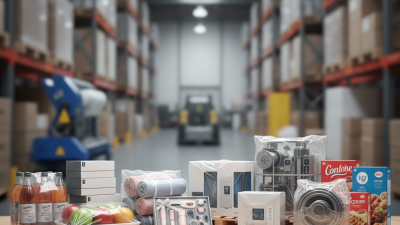
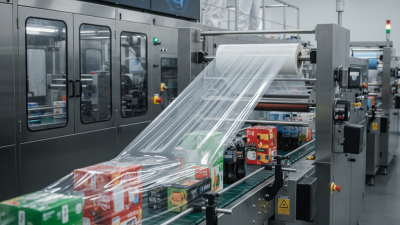
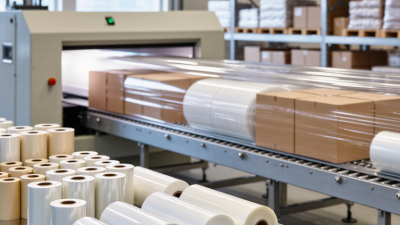
Choosing a reliable supplier is central to effective shrink wrap packaging decisions. Film quality affects product protection, presentation, and daily packing efficiency. This guide introduces ten notable suppliers serving international markets and diverse industries. It considers manufacturers, distributors, and specialist packaging companies with established market visibility. The review examines film clarity, seal strength, thickness options, equipment compatibility, and production consistency. Practical details matter.
Each supplier is assessed through publicly available information, product documentation, customer experience, and industry reputation. Where documented, the comparison considers certifications, manufacturing capabilities, export support, and technical assistance. Buyers can also evaluate minimum order quantities, lead times, customization options, and after-sales communication. A supplier offering low prices may not deliver dependable rolls or stable dimensions. That difference becomes obvious when film tears beside a busy pallet wrapper.
The list is intended as a practical starting point, not a permanent verdict. Markets change. Product lines, factory locations, and service standards can shift without much warning. A supplier may perform well for retail bundles but struggle with heavy industrial loads. This guide may also miss regional strengths that are less visible online. That limitation deserves attention.
Readers should request samples, technical data sheets, and current quotations before making decisions. Testing film on the actual machine remains essential. Good packaging begins with evidence, not attractive claims. The strongest choice balances performance, compliance, communication, and total operating cost. Reliability is built over repeated shipments.
Top 10 Shrink Wrap Packaging Suppliers Worldwide? Market Definition and 2024–2030 Growth Data
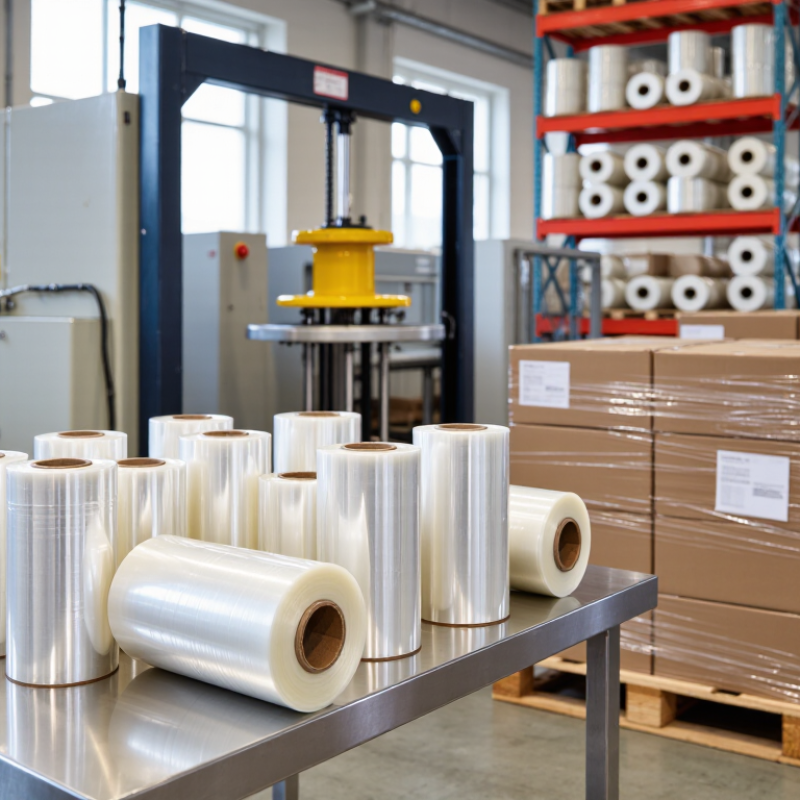
Shrink-wrap packaging uses heat-sensitive plastic film to tightly cover products, trays, or grouped cartons. The process improves load stability, dust protection, and retail visibility. It includes polyolefin, polyethylene, and PVC films, although material definitions vary across research firms. That matters.
Grand View Research estimates the global shrink film market will expand at approximately 5% CAGR from 2024 to 2030. Its analysis links growth to rising packaged-food demand, beverage multipacks, and e-commerce shipping. Smithers also identifies lightweight films and downgauging as important packaging trends through 2030. However, published forecasts differ because some reports include stretch film, while others exclude industrial wrapping.
Supplier evaluation requires more than production volume. Buyers should check seal strength, film gauge consistency, recycling guidance, and machine compatibility. A warehouse testing 15-micron film may find better material efficiency, but weaker puncture resistance can increase waste. That trade-off is easy to miss. Energy use also deserves attention, especially when tunnels operate continuously. The market is growing, but “sustainable” claims remain incomplete without verified material data, recovery infrastructure, and measured lifecycle performance. Sources: Grand View Research, Shrink Film Market Size, Share & Trends Analysis Report, 2024–2030; Smithers, The Future of Flexible Packaging.
| No. | Market dimension | 2024 baseline | 2030 outlook | Growth indicator | Definition or interpretation |
|---|---|---|---|---|---|
| 1 | Global shrink-wrap packaging market | Estimated market value: approximately US$8.0–9.0 billion | Estimated market value: approximately US$11.0–12.5 billion | About 5.0%–6.0% CAGR | Published market studies use different inclusion criteria; the range reflects film, machinery-linked, and packaging-use definitions. |
| 2 | Polyolefin shrink film | Largest premium film category; widely used for food, household goods, and retail multipacks | Continued volume and value growth through lightweighting and improved sealing performance | Approximately 5%–7% CAGR | Polyolefin films generally offer good clarity, toughness, and suitability for direct-contact packaging applications. |
| 3 | Polyethylene shrink film | Major volume segment, particularly in pallet bundling, beverage multipacks, and transport packaging | Strong demand from logistics, warehouse distribution, and high-volume secondary packaging | Approximately 4%–6% CAGR | PE shrink film is valued for puncture resistance, load stability, and relatively efficient material use. |
| 4 | Food and beverage applications | Largest end-use cluster across retail multipacks, trays, cartons, and promotional bundles | Expansion supported by convenience formats, packaged beverages, and shelf-ready distribution | Approximately 5%–6% CAGR | Growth is linked to packaged-food consumption, automated wrapping, and demand for transparent product presentation. |
| 5 | Industrial and logistics packaging | High-volume use in pallet stabilization, construction products, appliances, and warehouse handling | Increasing use of downgauged films and machine-applied stretch/shrink solutions | Approximately 4%–6% CAGR | E-commerce fulfillment and regional distribution networks support demand for secure unitization and tamper visibility. |
| 6 | North America | Mature market with high penetration of automated wrapping and multipack formats | Moderate expansion led by downgauging, recycling targets, and automation upgrades | Approximately 3%–5% CAGR | Demand is supported by established food, beverage, retail, and industrial packaging infrastructure. |
| 7 | Europe | Advanced market emphasizing material reduction, recyclability, and packaging compliance | Growth concentrated in recyclable mono-material films and lower-gauge packaging | Approximately 3%–5% CAGR | Regulatory pressure is shifting product development toward recyclable structures and improved resource efficiency. |
| 8 | Asia-Pacific | Fastest-expanding regional demand base, supported by manufacturing, retail, and urban consumption | Strongest absolute growth contribution from China, India, Southeast Asia, and other developing markets | Approximately 6%–8% CAGR | Industrialization, modern retail, food processing, and export packaging are key regional demand drivers. |
| 9 | Recyclable and downgauged films | Growing from a smaller base than conventional film formats | Expected to outpace overall market growth as converters reduce material use and improve recyclability | Approximately 7%–10% CAGR | The segment includes thinner films, recyclable mono-material structures, and films containing recycled content where technically suitable. |
| 10 | Automatic shrink-wrapping systems | High adoption in large food, beverage, pharmaceutical, and consumer-goods production lines | Additional investment expected in robotics, vision inspection, energy efficiency, and line integration | Approximately 5%–7% CAGR | Automation improves throughput, film consistency, labor efficiency, and package quality control. |