How to Choose the Right Poly Bags for Your Business?
Choosing the right poly bags can affect product protection, packing speed, storage, and how customers view your business. A bag that looks suitable on a screen may feel too thin in hand or prove awkward on a busy packing line. Small choice. Real consequences.
Start with what the bag must do. Consider the product’s size, weight, shape, and surface. A soft garment needs different protection from a set of small hardware parts. A lightweight bag may work well for clean, dry items, while products with sharp corners may need stronger material or added protection. Sizing matters. An oversized bag can waste storage space and look untidy; one that is too tight can strain seams or slow packing. Think about closure, clarity, thickness, and whether the bag needs to be printed. Each feature can affect cost and usability. Still, specifications alone do not tell the whole story. A bag that performs well in a sample test may behave differently during daily use.
This guide looks at practical ways to compare poly bags, from material and dimensions to closures and supplier support. It also considers how order volume, storage conditions, and packing routines shape the decision. Ask for product details and samples where possible, then test them with your actual items. No option is perfect for every situation. That is worth remembering. The best choice is usually the one that meets your protection needs reliably without adding unnecessary cost or complexity.
Identify the Products and Packaging Requirements
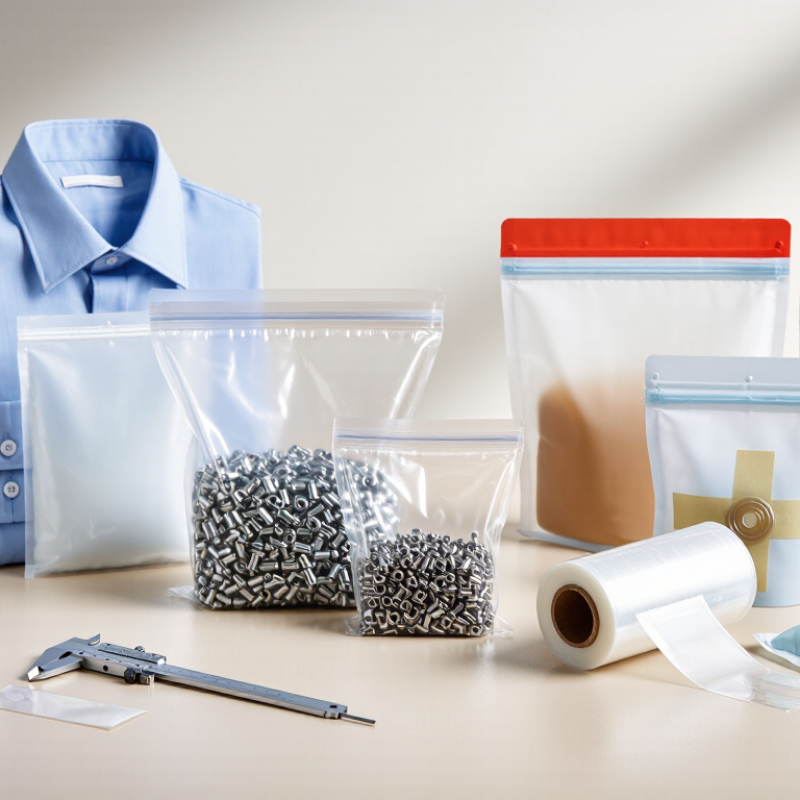
Before choosing a poly bag, identify the product’s dimensions, weight, and shape. Measure the item at its widest points, including handles, folds, or attached parts. Leave enough room for easy loading without excessive empty space. Measure twice. A snug fit can reduce shifting, while a bag that is too tight may split at the seams.
Consider the product’s surface and what it needs protection from. A soft garment may need a different bag from a metal part with sharp corners. For heavier items, check the bag’s thickness, seam strength, and resistance to punctures. If dust or moisture is a concern, consider the opening style and how securely it can close. Small details matter.
Think about how bags will be handled in storage, packing, and transit. Clear film helps workers identify contents quickly, while opaque film offers less visibility. Test a sample with the actual product and packing process; a bag that works on a desk may be awkward on a busy line. There is no perfect choice for every item. A thicker bag can add cost and material, while a thinner one may not hold up. The right balance depends on real use, and it may take a few trials to find it.
How to Choose the Right Poly Bags for Your Business? - Identify the Products and Packaging Requirements
Use this comparison as a starting point. The appropriate bag depends on the product’s weight, shape, sharp edges, storage conditions, and required closure. Thickness ranges are typical starting points, not guarantees of performance.
| Product or Packaging Need |
Suitable Bag Type |
Common Material |
Typical Starting Thickness |
Key Requirements and Checks |
| Lightweight apparel, fabric items, or soft accessories |
Flat bag or garment bag |
LDPE or LLDPE |
1–2 mil |
Choose a bag that fits without excessive empty space. Consider a hanging hole or suffocation warning where applicable. |
| Small, lightweight retail items that need product visibility |
Clear flat bag or resealable bag |
LDPE or polypropylene (PP) |
1–2 mil |
PP can offer high clarity and a relatively crisp feel. Check whether the bag needs a header, hang hole, or resealable closure. |
| E-commerce orders containing soft goods or several small items |
Flat bag, gusseted bag, or poly mailer, depending on the shipping format |
LDPE or LLDPE |
2–3 mil |
Check the filled dimensions, seal strength, and resistance to tearing during handling. A bag alone may not provide cushioning for fragile goods. |
| Hardware, components, or parts with moderately sharp edges |
Heavy-duty flat bag or gusseted bag |
LLDPE or LDPE |
3–4 mil |
Evaluate puncture and seam performance with the actual product. Consider inner protection for very sharp edges. |
| Dense or heavy products requiring added film strength |
Heavy-duty flat bag or gusseted bag |
LLDPE or LDPE |
4–6 mil |
Test the filled bag for lifting, stacking, and transport. Bag size, film formulation, and seal quality all affect performance. |
| Dry products needing a basic moisture barrier during storage |
Flat bag with heat seal or a suitable closure |
LDPE or HDPE |
2–4 mil |
Polyethylene helps resist moisture, but a standard poly bag is not automatically airtight or a high-performance moisture-barrier package. Check the seal and storage conditions. |
| Food products requiring direct contact packaging |
Food-contact bag selected for the specific food and use conditions |
Food-contact-grade LDPE or HDPE |
1–3 mil |
Verify suitability for the food type, temperature, and intended use, along with applicable food-contact requirements. Do not assume every poly bag is food-grade. |
| Products that need a wider base or extra capacity |
Gusseted bag |
LDPE, LLDPE, or HDPE |
2–4 mil |
Measure the item in its packed shape and allow room for the gusset to open. Confirm the bottom seal can support the filled load. |
Selection note: One mil equals 0.001 inch. Before ordering, confirm bag dimensions, opening and closure style, required transparency, load, and any food-contact or labeling requirements. Test samples with the actual product and packing process; thickness alone does not determine bag strength.
Compare Poly Bag Materials and Thickness Options
Poly bag material changes how a package feels and performs. Low-density polyethylene (LDPE) is flexible and often clear, making it useful for soft goods, garments, and irregular shapes. High-density polyethylene (HDPE) tends to feel crisper and stiffer. It can provide useful strength at a lighter thickness, though the rustling sound may not suit every product. Polypropylene offers a clear, polished look for displaying items, but it stretches less than LDPE.
Feel the difference. A sample can reveal details a specification sheet cannot: whether the bag clings to fabric, holds its shape, or develops a sharp crease. Thickness is commonly listed in mils; one mil equals 0.001 inch. A thicker bag may resist punctures better, but thickness alone does not guarantee durability. Sharp corners, heavy contents, and rough handling can still cause failure.
Match thickness to the actual load, not just the product’s weight. A lightweight item with hard edges may need a tougher film than a heavier, smooth item. Test filled bags during packing and shipping, and check seams and closures after handling. It is easy to over-specify thickness and raise costs without solving the real problem. Compare samples from more than one thickness, and confirm the material is suitable for the intended use.
How to Choose the Right Poly Bags for Your Business?
Compare typical thickness options for common poly bag materials. Thickness ranges vary by supplier and intended use.
How to use this chart: HDPE produce bags are often thinner, while LDPE and polypropylene bags are available across a broader range of thicknesses. One mil equals 25.4 microns. Choose thickness based on the bag’s contents, weight, and puncture risk, and test samples for your application.
Select the Right Bag Size, Style, and Closure
Choosing a poly bag starts with the item’s actual dimensions, not its product listing. Measure its width, length, and height, then allow room for seams and easy loading. A folded shirt may fit a flat bag, while a boxed part often needs extra depth or a side gusset. Too much space can let products slide around; too little can strain the seams. Small details matter.
Match the bag style to how the item will be handled. Flat bags suit lightweight, uniform products, while gusseted bags expand around bulky shapes. For repeated access, a press-to-close zipper can be useful; for packing speed, an open-top bag may work better. Choose a closure that fits the workflow, not just the product. If staff need scissors to open every bag, that choice may slow packing.
Check thickness alongside the bag’s intended load and storage conditions; a thicker film is not automatically the best fit. For sharp edges or heavier contents, test a sample with the real item before ordering in quantity. It is easy to overlook how a closure affects usable space, so check the filled bag—not only its empty dimensions. Test it first.
Check Compliance, Sustainability, and Performance Needs
Before comparing prices, define where the bags will be sold and what they will hold. Requirements can differ by market and by use, especially for bags touching food or cosmetics. Request material specifications, food-contact documentation where relevant, and written confirmation of applicable requirements. A vague “compliant” claim is not enough.
Sustainability needs a reality check. The OECD’s Global Plastics Outlook (2022) reports that packaging generated about 40% of global plastic waste in 2019. That figure makes packaging choices worth examining, but it does not prove that any single bag is automatically better. Check recycled-content claims, local collection rules, and whether the bag can be sorted by available recycling systems. A recyclable label helps only when local infrastructure accepts that format. Small print matters.
Performance is just as practical. Test the actual bag with your product: load it, seal it, and handle it during packing and delivery. Ask suppliers for gauge, seal-strength, and puncture-resistance data, then run a small trial under real conditions. A bag that tears at a sharp corner can create returns and extra waste. I’ve seen teams focus on thickness alone; it is an imperfect shortcut. Consider weight, seams, storage temperature, and how employees open the bags. Keep test results and supplier documents together, so purchasing decisions remain traceable.
Evaluate Suppliers, Costs, and Quality Standards
Choosing poly bags means comparing suppliers on more than the quoted price. The Flexible Packaging Association’s 2023 State of the Industry report estimated U.S. flexible packaging sales at $42.9 billion in 2022. That figure shows market scale, not uniform bag specifications. Ask suppliers to state resin type, thickness tolerance, minimum order quantity, lead time, and change-control terms. Compare delivered cost per usable bag, including freight, setup fees, rejected units, and packing-line downtime. A low quote can become expensive. Small details matter.
Set written acceptance criteria before placing a large order. ASTM D882 can assess tensile properties, while D1709 and D1922 cover impact and tear resistance. Request lot-specific test results and certificates, then check sample bags on your own filling line. A supplier’s standard test may not match your product or handling conditions; that gap deserves a second look. The U.S. EPA’s 2018 materials report estimated containers and packaging at 82.2 million tons, or 28.1% of municipal solid waste. This includes all packaging, not poly bags alone. Ask for clear material documentation and disposal guidance, and verify any environmental claims rather than relying on broad labels.