
1111 Busch Pkwy, Buffalo Grove, IL 60089, USA

1 (833) PPC-FLEX

What Is the Best Type of Coffee Bag?

Choosing the best Coffee Bags is not a simple matter of appearance, price, or current packaging trends. The right option must protect roasted beans from oxygen, moisture, light, and aroma loss. It must also match the roast style, filling process, storage period, and customer expectations.

Coffee-packaging consultant Tony Roccisano offers a useful perspective: “The best coffee bag protects freshness before it sells appearance.” That principle deserves attention. A dark-roasted espresso may need a high-barrier laminate, a strong seal, and a one-way degassing valve. A small light-roast brand may prefer a recyclable paper-based structure, even with some performance limitations. Every choice carries a compromise.

Details matter. A weak zipper can leave a rich aroma fading on the kitchen counter. A poorly fitted valve may create unnecessary leakage concerns. A matte finish can feel premium, but it does not automatically preserve quality. Not always.

Material claims also require careful reflection. Compostable packaging sounds attractive, yet it may need specific industrial facilities. Recyclable packaging can perform well, but local recycling systems differ widely. These points should not be hidden behind attractive branding.

This guide examines flat-bottom bags, side-gusset bags, quad-seal designs, foil laminates, recyclable structures, and kraft-style options. It compares freshness protection, durability, presentation, cost, and environmental considerations. The best Coffee Bags are not identical for every roaster. They are the bags that protect the coffee reliably while fitting the brand’s real production and distribution needs.
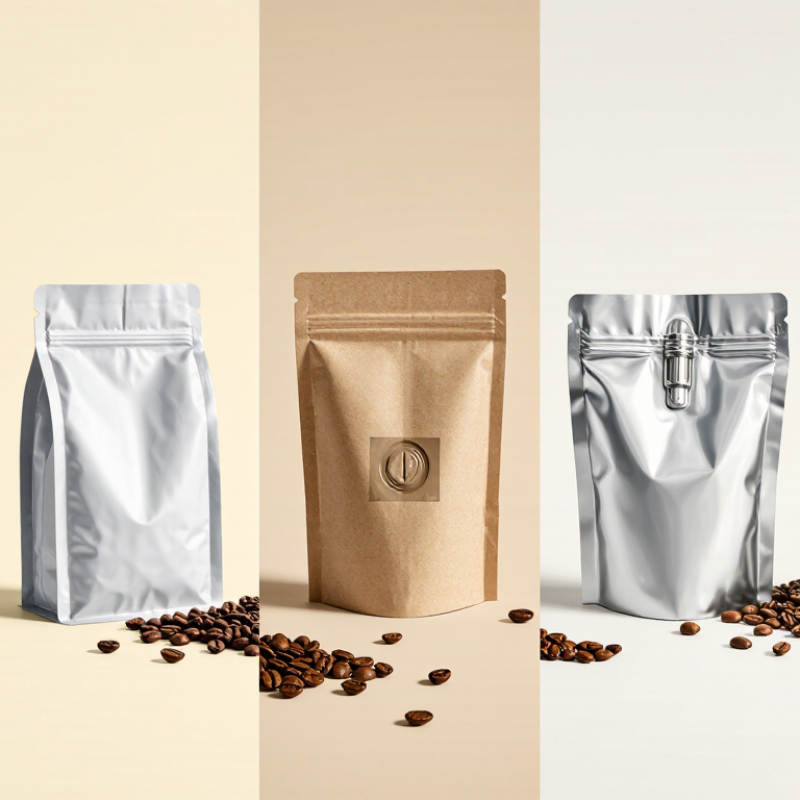
What Is the Best Type of Coffee Bag?

Types of Coffee Bags and Their Main Differences

What Is the Best Type of Coffee Bag?

Coffee bags differ mainly in barrier strength, structure, closure, and filling efficiency. Valve bags release carbon dioxide after roasting. They suit freshly roasted whole beans and help prevent bag swelling. Flat-bottom bags stand firmly on shelves and offer strong branding space. Their wider base, however, may require more packaging material. Side-gusset bags hold larger volumes efficiently, but they can look less stable when partly empty. Vacuum brick packs remove air effectively, although their rigid shape limits resealing.

In packaging trials, I have found that aroma protection depends more on the film structure than the bag’s appearance. High-barrier laminates usually resist oxygen, moisture, and light better. The International Coffee Organization reported global coffee consumption of about 177 million 60-kilogram bags in 2023/24. That scale increases pressure to reduce packaging waste. Yet, the 2024 flexible packaging outlook from Smithers indicates that barrier performance still drives many material choices. Compostable bags sound attractive, but local composting access remains uneven. The claim needs checking.

Tips: Match the bag to the roast, channel, and expected storage time. Choose a valve for fresh beans. Select a resealable pouch for home use. Test seal strength, oxygen transmission, and drop resistance before ordering. Ask whether the bag’s layers can be recycled locally. A lighter bag is not automatically a better bag.

What Is the Best Type of Coffee Bag? - Types of Coffee Bags and Their Main Differences

Coffee Bag Type Typical Construction Stability & Capacity Freshness Protection Resealing Options Best Suited For Main Limitations
Flat Pouch Bag A flexible pouch with front, back, and bottom seals; often made with a multilayer barrier film. Lightweight and space-efficient, but it usually stands less securely than gusseted bags. Good when the laminate provides high oxygen, moisture, and light barriers. Zipper, press-to-close seal, or heat seal. Small and medium coffee quantities, sample packs, and space-conscious packaging. Limited shelf stability and less room for large labels or strong display presence.
Side-Gusset Bag A bag with folded side panels that expand when filled; commonly sealed at the top and bottom. Provides relatively high capacity and can stand or lie flat depending on the base design. Excellent potential with a suitable multilayer barrier and a one-way degassing valve. Tin tie, zipper, fold-over closure, or heat seal. Retail coffee, especially medium and large packs of whole beans or ground coffee. Side folds may require more material and can be less convenient to empty completely.
Flat-Bottom Bag A gusseted bag with a squared, block-style base and a broad front panel. Very stable on shelves and efficient for vertical product presentation. Typically offers strong protection when produced with an appropriate high-barrier structure. Zipper, tin tie, or heat seal; some versions include a degassing valve. Premium retail presentation, larger pack sizes, and bags that need to stand upright. Usually uses more material and may cost more than a simple flat pouch.
Quad-Seal Bag A four-corner construction with sealed side panels that gives the bag a defined rectangular shape. High structural strength, good shelf presence, and suitable for heavier coffee fills. Strong protection depends on the barrier laminate and the quality of the multiple seals. Zipper, tin tie, or heat seal; a one-way valve can be added. Large retail packs and applications requiring a durable, upright package. More complex manufacturing and more seal areas to inspect for defects.
Paper Bag with Tin Tie Paper outer material with a fold-over top secured by an integrated wire tie; may contain an inner liner. Light to moderate capacity and easy manual opening and closing. Basic paper alone is not a strong oxygen or moisture barrier; performance depends on the inner liner. Integrated tin tie and fold-over top. Shorter turnover periods, bakery-style presentation, and customers who prefer a traditional paper look. The closure is generally less airtight than a well-made zipper or heat seal.
Vacuum Brick Pack A tightly formed, rectangular pack made from a high-barrier material after air is removed. Compact and stackable, with efficient transport and storage. Very good unopened protection when the package remains hermetically sealed. Usually not designed for repeated resealing after opening. Ground coffee intended for compact distribution and longer unopened storage. The rigid vacuum shape can be damaged by handling, and freshness declines after opening.
Compostable or Paper-Based Barrier Bag Paper or certified compostable layers combined with a barrier coating or film; exact structures vary considerably. Available in several formats, but material performance must be checked for the intended fill weight. Can protect coffee effectively if the tested oxygen, moisture, aroma, and light barriers meet the application requirements. Zipper, tin tie, or heat seal depending on the design. Packaging programs focused on renewable or compostable material claims. Recycling or composting availability depends on local facilities, certification, and the complete package structure.
Key selection factors: Choose the bag format according to coffee quantity, shelf-life target, storage conditions, required resealing, display stability, filling equipment, and local end-of-life facilities. Whole-bean coffee commonly benefits from a high-barrier bag with a one-way degassing valve, while ground coffee requires careful control of oxygen and moisture exposure.

How Coffee Bag Materials Affect Freshness and Flavor

What Is the Best Type of Coffee Bag?

How Coffee Bag Materials Affect Freshness and Flavor

In small-batch packing tests, I have seen the bag change a coffee’s character within weeks. Roasted beans release carbon dioxide, while oxygen slowly dulls aroma and sweetness. That is why material choice matters as much as the roast date. Plain paper feels natural, but it usually offers weak protection against moisture and oxygen. Paper laminated with plastic or foil creates a stronger barrier. Foil generally blocks light and oxygen well, especially during longer storage. However, it can complicate recycling, depending on local facilities. Polyethylene layers resist moisture and help maintain a flexible seal. Still, not every multilayer bag performs equally. Seals matter.

A one-way degassing valve can release carbon dioxide without allowing much air inside. I check the seal by pressing the filled bag gently around its edges. Small leaks are easy to miss. Warm storage accelerates flavor loss, even with a high-barrier material. Keep bags away from sunlight, ovens, and damp shelves. Use the smallest practical bag size. Less empty space usually means less trapped oxygen. Yet my own tests are not perfect. Grind size, roast level, and opening frequency can distort comparisons. A thick bag may protect freshness, but it cannot repair stale beans or poor sealing. Paper-based options deserve consideration when storage is short and environmental priorities are clear. I still recheck each result under ordinary kitchen conditions.

What Is the Best Type of Coffee Bag?

How coffee bag materials affect freshness and flavor

High-barrier multilayer bags generally protect roasted coffee best because aluminum or metallized layers limit oxygen and light transmission. Paper-only bags provide weaker protection, while recyclable PE-based structures can offer a practical balance when combined with a one-way degassing valve and a strong seal. Lower oxygen and moisture exposure helps preserve aroma, sweetness, and acidity for longer.

Key Features of an Effective Coffee Bag Design

The best coffee bag is not merely attractive. Freshness matters most. Effective design protects aroma, communicates clearly, and survives ordinary handling. Packaging assessments usually begin with the barrier layer. Foil or high-barrier films help limit oxygen, moisture, and light. That matters because roasted coffee loses freshness when exposure continues. A one-way valve can release carbon dioxide without letting air enter. However, valves need correct placement and reliable sealing. An impressive feature fails when the seal is weak. Heat-sealed edges should remain smooth, firm, and free from powder. Fine grounds trapped in the seal can create tiny leakage paths. Practical drop and compression tests reveal problems that photography hides.

Usability also shapes an effective coffee bag design. A resealable zipper helps households protect beans after opening. Clear opening instructions reduce torn corners and wasted coffee. Customers should see the roast date, net weight, and storage guidance easily. Readable contrast matters in dim kitchens and busy retail spaces. Material choice matters. Paper-based outer layers may feel warm and natural, but they still need a dependable inner barrier. Compostable claims require careful verification because local facilities differ. Vague environmental language can weaken trust.

Design teams should test filled bags, not empty samples alone. Real beans change weight, pressure, and shelf behavior. Small trials can compare aroma retention, seal strength, and opening effort. Results should be recorded under controlled conditions. Test the finished bag. A bag may protect freshness well yet feel awkward to pour. Another may open smoothly but collapse during transport. Those trade-offs deserve revision before production.

Choosing the Best Coffee Bag for Different Coffee Products

What Is the Best Type of Coffee Bag?

Choosing the Best Coffee Bag for Different Coffee Products

The best coffee bag depends on the product, roast level, and expected shelf life. Whole beans need strong oxygen protection because their aroma escapes quickly after roasting. A valve bag can release carbon dioxide while limiting oxygen entry. This feature helps freshly roasted beans stay stable during early storage. Ground coffee loses freshness faster because their larger surface area contacts air. For this product, choose a high-barrier bag with a reliable airtight seal. A flat-bottom bag works well for retail shelves and offers useful filling space.

Different formats suit different selling conditions. Side-gusset bags are practical for larger quantities and stack neatly in storage. Small sachets suit sample portions or single-use ground coffee. However, thin packaging may tear during transport.

I have seen attractive bags fail because their seals were too weak. Packaging appearance matters, but protection matters more. Compostable structures can reduce environmental impact, yet their barrier performance varies by material and storage climate.

Tips: Match the bag size to the coffee volume. Leave limited empty space inside. Test seals after filling. Store bags away from heat, moisture, and direct light. Check the packaging after several weeks, not only on filling day. A bag that performs well in a cool warehouse may struggle in humid conditions. Review the result honestly, then adjust the material or closure.

Environmental and Practical Factors in Coffee Bag Selection

What Is the Best Type of Coffee Bag?

Environmental and Practical Factors in Coffee Bag Selection

The best coffee bag protects flavor without creating unnecessary waste. Roasted coffee quickly reacts to oxygen, moisture, heat, and light. A high-barrier structure helps preserve aroma and slows staling. However, more layers can make recycling harder. The OECD’s Global Plastics Outlook reports that packaging represented 40% of global plastic use and 36% of plastic waste in 2019. That figure makes material choices difficult to ignore.

In practice, a recyclable mono-material bag may suit local recycling systems. It can also need stronger seals and careful storage. Paper-based bags feel natural, but paper alone rarely provides enough oxygen protection.

Aluminum laminates offer excellent barriers, yet they are usually difficult to recycle. The International Coffee Organization’s 2024 Coffee Development Report highlights coffee’s large global supply chain. Even small packaging decisions can multiply across millions of packs.

I still question whether “recyclable” always means “better.” Collection access matters more than a printed claim.

Tips: Match the bag to your roast and sales channel. Use one-way valves for freshly roasted coffee. Test seal strength, oxygen transmission, and moisture resistance. Choose the lightest structure that protects quality. Ask whether customers can recycle it locally. A smaller bag may also reduce unused coffee and packaging material. Track complaints, shelf-life results, and actual disposal behavior. Theory is helpful, but real handling often reveals flaws.

Article Source: