1111 Busch Pkwy, Buffalo Grove, IL 60089, USA

1 (833) PPC-FLEX

7 Tips for Buying Paper Salad Bowls in Bulk

Buying Paper Salad bowl inventory in bulk can lower unit costs, but the wrong specification can leave kitchens with leaky, awkward packaging. The wider market is growing: Grand View Research valued the global food packaging market at USD 456.0 billion in 2023 and projected a 5.2% compound annual growth rate from 2024 to 2030. That figure covers many packaging types, not salad bowls alone. The National Restaurant Association also projected U.S. restaurant sales of USD 1.1 trillion for 2024, underscoring the scale of foodservice demand. These figures offer context, not a guarantee that every supplier or product will perform well.

The practical test starts with the food. A 32-ounce bowl may suit a leafy lunch, while a denser grain salad can need more headroom. Check the bowl’s usable capacity, rim fit, lid compatibility, and resistance to dressing. Ask for samples, then fill them with chilled ingredients and carry them through a typical service route. Small details matter. Confirm case counts, minimum orders, delivery times, and storage requirements before comparing unit prices. A cheaper bowl may cost more if lids must be purchased separately or damaged cartons cannot be used. Not every bowl fits. Review material and disposal claims carefully, since local collection options vary and product descriptions may not explain real-world handling. The seven tips ahead focus on these purchasing checks, helping buyers balance price, function, and reliable supply without treating one bulk order as a perfect forecast.
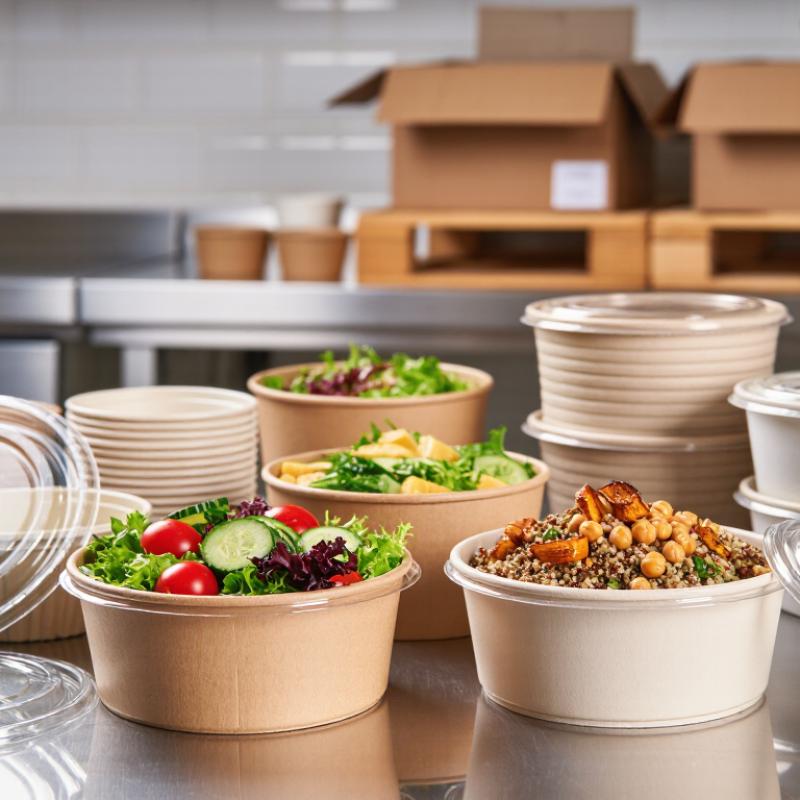
7 Tips for Buying Paper Salad Bowls in Bulk

Define Your Needs and Estimate Order Quantities

Before requesting a quote, define what each bowl must handle: portion size, hot or cold food, toppings, lids, and expected time in transit. A 24-ounce bowl may suit a grain lunch, while a shallow bowl can make leafy salads easier to serve. Check whether your current lids fit securely. Small details matter.

Estimate demand from actual sales, not a vague sense of how busy you get. The National Restaurant Association’s 2024 State of the Restaurant Industry report projected U.S. restaurant and foodservice sales at $1.1 trillion. That figure shows the sector’s scale, but it cannot predict your shop’s bowl use. Start with a count. Review four to eight weeks of daily orders, then calculate bowls used per week, including catering and seasonal peaks.

Add a modest reserve for delivery delays or a sudden busy week, and compare your estimate with the supplier’s case quantity and storage space. Keep records. Track bowl use and damaged stock after delivery; revise the next order using those numbers. A 10% buffer can be a practical starting point, not a universal rule. I would be cautious about ordering several months’ worth before testing the bowl with real meals. Stack height, lid fit, and leakage may look fine on paper, then disappoint at lunch rush.

7 Tips for Buying Paper Salad Bowls in Bulk: Define Your Needs and Estimate Order Quantities

Example planning estimate for one month: expected use is based on projected servings by bowl size, and the suggested order adds a 10% buffer to help cover fluctuations. Replace these illustrative figures with your own sales or serving estimates before placing a bulk order.

Compare Paper Materials, Coatings, and Sustainability

When buying paper salad bowls in bulk, compare the base paper and the barrier coating separately. Virgin fiber often gives a smoother, sturdier bowl; recycled content can reduce demand for new fiber but may vary in strength and appearance. A coating helps resist dressing and moisture. It also affects what happens after use: plastic-lined bowls may not be accepted in local paper recycling, while “compostable” coatings need suitable processing facilities. Check the full product specification, not just the front-of-pack claim.

Tips: Ask for the paper’s recycled-content percentage. Request coating details. Test bowls with cold greens and oily dressing. Check for leaks after 30 minutes. Compare rim stiffness and nesting. Confirm food-contact documentation. Ask local waste haulers what they actually accept.

For sustainability context, the U.S. EPA reported a 68.2% recycling rate for paper and paperboard overall in 2018. That figure does not describe salad bowls specifically, and I would not use it to assume a coated bowl is recyclable. Ask suppliers for test results or certifications that match your intended disposal route. A sample can look excellent when dry, then soften under vinaigrette. That’s worth checking before committing to a pallet.

Choose Bowl Sizes and Check Product Specifications

Tip 1: Match bowl size to the portion, not just the menu photo. A 24-ounce bowl may suit a grain salad, while leafy greens need more room. Check both capacity and rim diameter. A wide bowl makes toppings easier to reach, but takes up more storage space. Test a typical serving with dressing included.

Tip 2: Read the full product specifications before ordering a case. Compare bowl depth, dimensions, paper weight, and any lining or coating. These details affect stiffness and how the bowl handles moist ingredients. Check whether the supplier provides food-contact information and temperature guidance. If hot toppings or heavy add-ons are common, ask how the bowl performs with them. Capacity can mislead.

Tip 3: Request a sample when possible, then fill it with your actual menu items. Leave it for several minutes. Look for soft spots, leaks, or edges that bend when lifted. Also confirm the case quantity and dimensions; bulk packaging can consume more shelf space than expected. One detail is easy to miss: lids may be sold separately, so verify fit and availability before placing a large order.

7 Tips for Buying Paper Salad Bowls in Bulk - Choose Bowl Sizes and Check Product Specifications
Tip What to Check Example Specification Why It Matters
1. Match capacity to the menu Choose a bowl that fits the usual serving size, toppings, and dressing. 12–16 fl oz for a side salad; 24–32 fl oz for many entrée salads. Right-sizing helps avoid bowls that look underfilled or leave too little room for mixing.
2. Compare dimensions as well as capacity Ask for the top diameter, base diameter, and bowl height; nominal capacity alone does not show the serving shape. Illustrative 24 fl oz format: about 6–7 in top diameter and 2–3 in high. Confirm the supplier’s actual drawing. Wide, shallow bowls suit layered salads, while deeper bowls can help contain ingredients during transport.
3. Check the material and lining Identify whether the bowl is paperboard, molded fiber, or another material, and ask what coating or barrier it uses. Specifications may list a PE or PLA lining, or a stated barrier treatment. Verify the exact construction. Material and lining affect moisture resistance, disposal options, and compatibility with local recycling or composting systems.
4. Verify performance with your food Request samples and test with dressing, oily ingredients, chilled foods, and the expected holding time. Record leakage, softening, rim strength, and lid fit after a representative service period. Performance depends on the bowl construction and how it is used; a sample test is more reliable than a general claim.
5. Confirm lid compatibility Check that the lid matches the bowl’s rim profile and is sold in the same size system. Ask for the lid’s material, fit details, and whether it is vented or unvented. A secure, compatible lid helps reduce spills. A vented lid may be unsuitable when keeping a salad fresh is the priority.
6. Calculate the true bulk cost Compare price per usable bowl, including freight, lids, carton quantity, minimum order, and storage needs. Example calculation: total delivered order cost ÷ number of bowls received. A low unit price may not be the lowest overall cost if the order has high shipping charges or excess packaging.
7. Review documentation and order details Request a current specification sheet and confirm dimensions, capacity, case pack, lead time, and any food-contact documentation applicable to your market. Record the approved sample and written specifications before placing a large order. Written details make it easier to compare products and reduce the risk of receiving a different size or construction.
Note: Capacities and dimensions shown are general selection examples, not universal standards. Confirm the manufacturer’s measurements, tolerances, and local disposal requirements before ordering.

Evaluate Suppliers, Quality Standards, and Customization

When buying paper salad bowls in bulk, compare suppliers beyond the quoted unit price. Ask for bowl dimensions, paper weight, lining material, and case-pack quantities in writing. A reliable supplier should provide current food-contact documentation and explain how each specification is tested. Request samples from the same production process used for large orders. Fill one with dressing, chill it, and check for leaks or soft spots after several hours. Real use reveals more than a product sheet.

Quality can vary between batches, even when samples look identical. Ask how the supplier checks rim strength, coating coverage, and bowl shape during production. Small details matter. A lid that fits poorly can slow down a lunch service. Clarify lead times, minimum order quantities, and how damaged cases are handled. I once focused too heavily on price and overlooked carton dimensions; storage space became an awkward problem. It is worth checking the pallet plan early.

Customization may include printed artwork, bowl colors, sizes, or matching lids. Get a digital proof and confirm print placement before production. Ask whether ink coverage affects recyclability or the bowl’s performance with oily foods. Keep artwork simple if the logo must remain clear on a curved surface. Custom orders can require longer lead times, and setup charges may apply. Confirm those costs, along with reorder terms, before approving the design.

Compare Bulk Pricing, Shipping, and Storage Requirements

Compare quotes by cost per usable bowl, not just the advertised case price. Check how many bowls each case contains, whether lids are included, and whether pack sizes match your daily demand. A low unit price can hide excess inventory or mismatched accessories. Ask for price breaks at several quantities, then include handling charges. Small gaps matter. Keep quote details together; memory is unreliable.

Shipping can change the real cost of a bulk order. Request freight estimates, delivery fees, and the expected arrival window in writing. Confirm whether the carrier can reach your receiving area and whether someone can unload pallets. A missed delivery may mean extra work or fees. Compare suppliers using the same order quantity and delivery location. A spreadsheet helps, but estimates can still shift when fuel costs or schedules change.

Measure your storage area before ordering. Check case dimensions, pallet height, and the number of cases you can keep dry and accessible. Paper bowls should stay away from damp floors, leaks, and heat. Leave room to move cases without crushing the lower stack. Use older stock first. It is tempting to buy more for a lower price, but crowded storage can make that saving feel less worthwhile.