How to Choose the Right Anti Static Bag?
Choosing the right anti static bag is not a matter of picking the shiniest pouch or the lowest price. It begins with the part, its handling environment, and the risks along its journey. A bare circuit board, a populated control module, and a moisture-sensitive device may need different packaging. The wrong material can leave a component exposed to electrostatic discharge, while an unnecessary barrier can add cost without improving protection. Small details matter.
Industry guidance helps turn that choice into a specification. ANSI/ESD S541-2019, published by the ESD Association, addresses packaging materials for protecting electrostatic-discharge-sensitive items. IEC 61340-5-3:2022 covers packaging requirements for such items within an electrostatic-control program. These standards direct attention to measurable properties, including shielding, charge generation, and resistance, rather than appearance alone. They also remind buyers that a bag is only one part of a controlled handling process. It cannot compensate for every weakness in packing, storage, or workplace controls.
For practical selection, start by identifying whether the product needs shielding from external fields, protection from static charge, or moisture control as well. Then check the supplier’s test data, bag construction, seal quality, and compatibility with the item. Ask how performance was measured. A claim without a test method is hard to compare. And yes, it is tempting to choose one bag for every product. That shortcut may work—until it does not. A clear specification, supported by current standards and supplier evidence, makes the decision more reliable.
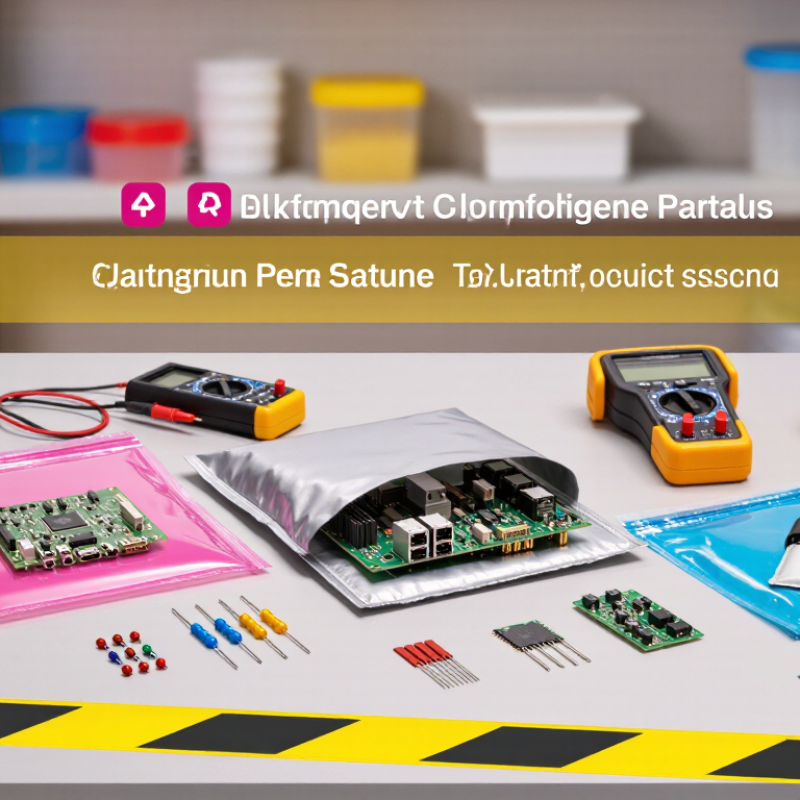
What an Anti-Static Bag Is and How It Protects Sensitive Components
An anti-static bag helps prevent electrostatic discharge from damaging sensitive electronic components. Some bags reduce static charge; shielding bags also help protect contents from external electrostatic fields. They are not interchangeable. The ESD Association notes that sensitive devices may be damaged by discharges below 100 volts, while people may not feel a shock until roughly 3,000 volts. The danger can be invisible.
ANSI/ESD S541-2019 sets requirements for packaging materials used with ESD-sensitive items. A suitable shielding bag typically has a dissipative inner layer and a conductive shield layer. The shield helps redirect charge around the contents, especially when the bag is properly closed. A tiny tear or an open seal can weaken that protection. For components handled inside an electrostatic protected area, check the packaging specification and match the bag to the handling process.
Tips:
Choose a bag sized to avoid crushing leads or leaving excess space. Check its shielding and charge-generation specifications, not just the “anti-static” label. Keep components inside until they reach a protected workstation. One detail is easy to overlook: a bag cannot repair damage caused before packing.
How to Identify the ESD Protection Level Your Product Requires
Choosing an anti-static bag starts with the product’s ESD sensitivity, not its size or color. Check the component datasheet for Human Body Model (HBM) and Charged Device Model (CDM) ratings. JEDEC JESD22-A114 tests HBM stress levels from 250 to 4,000 volts. JESD22-C101 evaluates CDM exposure up to 1,000 volts. These figures reveal risk, but they do not replace packaging validation.
Use dissipative bags for controlled charge release, and shielding bags when external electrostatic fields may reach the device. A shielding bag should reduce field penetration and safely drain charge through a grounded handling system. ANSI/ESD S541 and IEC 61340-5-1 emphasize packaging selection, grounding, and verification. The ESD Association’s ESD TR53 also recommends checking resistance and shielding performance after production changes. In practice, I have seen teams choose a bag from a supplier chart alone. That is an imperfect shortcut. Moisture, sharp leads, and repeated opening can change performance.
Tips: Confirm HBM and CDM ratings. Measure the bag’s surface resistance. Test shielding attenuation with the actual product inside. Keep sensitive devices inside the protective area. If the assembly contains a battery, display, or exposed connector, test the complete package, not only the bare circuit board. Document results under normal humidity and dry conditions. Small details matter.
How to Select the Right Bag Material, Size, and Closure
How to Choose the Right Anti Static Bag?
The material should match the component’s electrostatic sensitivity and storage conditions. Static-dissipative bags suit many ordinary electronic parts during short handling. Highly sensitive devices may need shielding bags with a conductive inner layer and protective outer surface. Moisture-sensitive components may also require barrier protection, desiccant, and a humidity indicator. Do not assume every silver-colored bag provides the same protection. Check technical data, resistance values, shielding performance, and test standards before purchasing.
Size affects both protection and packing efficiency. Measure the component, including leads, connectors, and attached cushioning. Add enough space for easy insertion, but avoid a loose bag that folds around sharp edges. A tight fit can stress delicate pins. A practical allowance is often 10 to 20 millimeters around the item, though packaging geometry may change this choice. Label the bag clearly without covering inspection areas. Small details matter.
Choose the closure according to access frequency and storage time. Reclosable zip closures work well for repeated inspection, but they may not provide the same seal as heat sealing. Heat-sealed bags offer stronger tamper evidence and better long-term protection. They are less convenient, though. I once treated convenience as the priority; that decision created unnecessary exposure during repeated handling. Review the workflow honestly. Also, confirm that operators use grounded procedures, because a suitable bag cannot correct careless handling.
How to Match Bag Features with Storage and Shipping Conditions
Choosing the Right Anti Static Bag for Storage and Shipping
Matching bag features with real storage and shipping conditions is more important than choosing the thickest material. A bag for circuit boards may need static shielding, while a bag for simple components may only require anti-static protection. Check the item’s sensitivity, size, weight, and exposed connectors before selecting a bag. A close fit reduces movement and friction during transport.
Storage conditions also matter. In humid warehouses, moisture-resistant packaging can help protect metal contacts from corrosion. In dry environments, static charges may build more easily, especially when bags rub against cartons or foam. For long-distance shipping, choose durable seams, reliable closures, and enough space for protective cushioning. Transparent material improves inspection, but it may reduce light protection. That trade-off is easy to overlook.
Tips: Test the complete packing method, not only the empty bag. Place the component inside, add cushioning, and simulate handling. Check for tearing, shifting, and surface charge afterward. Keep bags away from dusty floors and rough surfaces. Use documented performance data when available, but do not treat one test as permanent proof. Conditions change. A bag that worked in a clean warehouse may fail after repeated opening, folding, or exposure to heat. I would also review the choice after every shipping issue, because packaging decisions are rarely perfect on the first attempt.
How to Check Quality, Compliance, and Product Compatibility
Choosing an anti-static bag requires more than reading “ESD safe” on a carton. The ESD Association Technology Roadmap reports that many advanced electronic devices have human-body-model withstand ratings below 100 volts. A bag must therefore control charge, not merely look conductive. During incoming inspection, measure surface resistance with a calibrated meter. Check shielding attenuation, charge decay, and material thickness against the supplier’s test report. ANSI/ESD S541 defines packaging performance expectations, while IEC 61340-5-1 supports broader electrostatic-control programs. These references provide a stronger basis than vague sales language.
Compatibility matters just as much. Polyethylene, metallized films, and static-dissipative plastics behave differently around moisture, heat, and sensitive surfaces. Confirm that the inner layer will not react with coatings, optical parts, soldered assemblies, or cleanroom requirements. Review test conditions, including humidity and temperature, because resistance values can change sharply. Inspect seals and corners. Small gaps can expose a component during handling. The bag should also fit without excessive folding, which may damage the shielding layer. A glossy appearance proves little. That is easy to forget. One practical weakness remains: published data may represent samples, not every production batch. Request batch records, retest intervals, and certificates linked to recognized standards. Then test real packed products, because laboratory compatibility does not always predict field handling.