How to Choose the Right Kraft Paper Sheets?
Choosing Kraft Paper Sheets is less about picking brown paper and more about matching the material to a real task. Wrapping, printing, cushioning, and craft work each place different demands on a sheet. Begin with the intended use, then compare thickness, sheet size, surface texture, and strength. A heavier sheet may feel sturdier, but it can also be harder to fold or shape.
Look closely at product specifications. Basis weight, dimensions, and recycled content help you compare options, while finish affects how the paper handles ink, glue, or paint. If appearance matters, check the shade under the lighting where the finished work will be seen. Supplier descriptions can be useful, but they do not always show how a sheet performs at your worktable. Small details matter.
It is easy to focus on color and overlook handling. A quick trial can reveal whether the paper tears cleanly, creases neatly, or scuffs during use. Test before committing. For larger orders, request a sample and try it with your actual tools and materials. Consider storage, too: damp conditions may change how paper feels and behaves. There is no single best choice for every project, and even careful comparisons leave some uncertainty. A practical selection balances performance, appearance, availability, and cost, using clear specifications rather than assumptions.
What Kraft Paper Sheets Are and How They Are Made
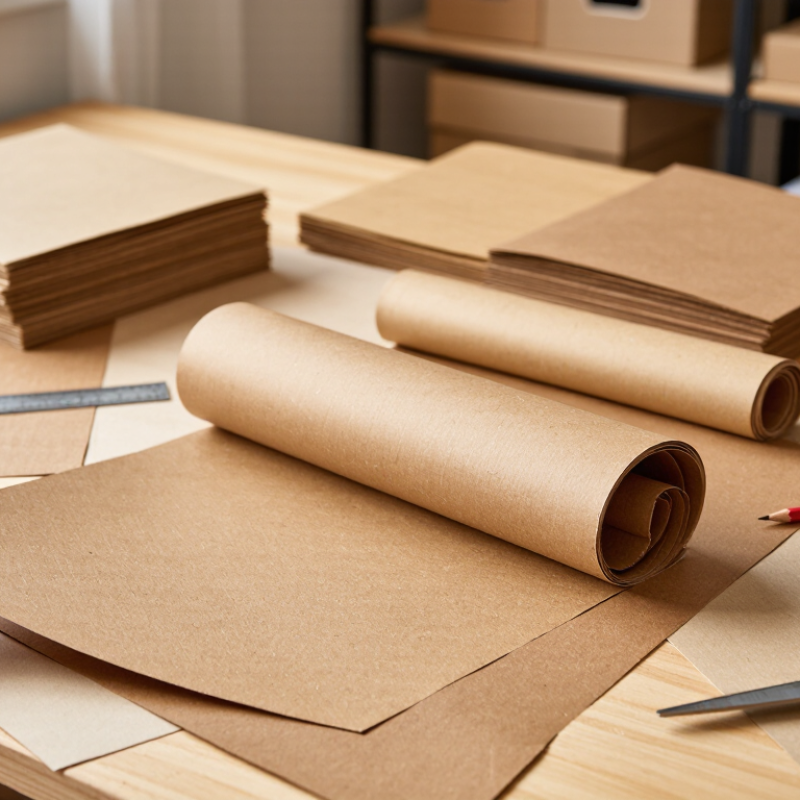
Kraft paper sheets are flat, cellulose-based papers made mainly from wood pulp. The name refers to the kraft pulping process, not a single color or thickness. Unbleached sheets are often brown because natural wood compounds remain in the pulp. Some sheets are bleached for a lighter appearance. They may feel rough and sturdy, though surface texture varies.
Making the paper begins with wood chips cooked in a chemical solution. This separates many fibers from lignin, the material that binds them in wood. The resulting pulp is washed, screened, and spread onto a moving mesh. Water drains away, and rollers press the wet fiber layer into a sheet. Heated cylinders dry it. Simple steps, but small process changes can affect strength and feel.
In handling, a sheet’s weight and grain direction are noticeable. A heavier sheet may resist tearing, but it can also be harder to fold neatly. Brown paper is not automatically stronger than bleached paper; fiber quality and manufacturing matter too. That distinction is easy to miss. Recycled fiber may also be blended in, which can change consistency. A slight variation in shade or thickness is not necessarily a flaw, though it can complicate projects requiring a uniform finish.
Which Sheet Properties Affect Strength and Performance
Kraft paper strength depends on more than thickness. Check grammage, caliper, fiber quality, and moisture together. Grammage, measured in grams per square metre, tells you how much fiber is present, but a heavier sheet is not automatically stronger. ISO 536 specifies how to measure grammage, while ISO 1924-2 covers tensile properties. Ask suppliers for test results, not just a “heavy-duty” description. Machine direction also matters: a sheet may resist pulling better one way than across the grain. Small details matter.
For bags, wrapping, or interleaving, match the test to the job. Tensile strength helps assess resistance to pulling; tear resistance matters when a small nick could spread. Moisture can soften paper and change how it handles, so test sheets in conditions close to your workspace. CEPI’s Key Statistics 2023 reports a 79.3% paper recycling rate in Europe for 2022. That figure describes the wider recycling system, not the strength of an individual sheet; recycled fiber content and grade should still be checked directly.
Tips: Request grammage, tensile, and tear results for the exact grade. Compare samples under the same load and humidity. Look for edge cracking, uneven thickness, or limp corners. One limitation: a brief hand test is useful for screening, but it cannot replace standardized testing.
How to Choose the Right Kraft Paper Sheets?
Which sheet properties affect strength and performance?
Tensile index expresses tensile strength relative to paper weight, making it useful for comparing grades. Basis weight also affects the sheet’s absolute load capacity. Values shown are illustrative representative examples, not universal specifications; moisture, fiber quality, sheet formation, and machine direction can change performance.
How to Match Paper Weight and Size to Your Project
Choosing kraft sheets starts with the load they must carry, not just their color. Paper weight is usually listed in grams per square meter (gsm); a higher number often means a heavier, stiffer sheet, though fiber mix and moisture also affect performance. For light wrapping or tags, try roughly 70–90 gsm. For folded sleeves, dividers, or small product wraps, 100–150 gsm may hold its shape better. These are starting points, not guarantees. Test a sample. A folded corner can reveal stiffness more clearly than a specification sheet.
Match sheet size to the finished object, then allow extra paper for folds, seams, and overlap. For a flat item measuring 20 by 30 centimeters, a 30-by-40-centimeter sheet may leave room for a simple wrap, but bulky edges need more. Sketch the folds and make one trial before ordering a full stack. Small detail, big difference.
AF&PA’s 2023 paper recycling data put the U.S. paper recovery rate at an estimated 65–69 percent. Efficient cutting can reduce offcuts, though clean, dry scraps are easier to recycle than coated or contaminated ones.
A slightly larger sheet may feel wasteful; sometimes it prevents a weak seam or a second layer. That trade-off deserves a real test.
How to Choose the Right Finish, Color, and Recycled Content
How to Choose the Right Kraft Paper Sheets?
The right finish depends on how the sheet will be used. A smooth finish gives fine lines and small text cleaner edges, while a rougher surface adds a tactile, natural look. Test your ink on the actual paper: absorbency can dull colors or cause feathering. Kraft shades also vary from pale tan to deep brown, so the same ink may look noticeably different. There is no perfect choice for every job; even a small color mismatch can change the feel of a package.
Recycled content is worth checking, but ask what the percentage means and whether it applies to the sheet itself. The U.S. Environmental Protection Agency reported that 68.2% of paper and paperboard was recycled in 2018. That broad category figure is useful context, not proof that a specific sheet contains recycled fiber. Look for supplier documentation, and consider whether the paper’s strength and appearance suit your application.
Tips: Order a few sheet samples before buying in bulk. Print a small test, fold it, and rub the surface to check scuffing. Compare colors in the lighting where customers will see the finished item. If recycled content matters, request a written specification rather than relying on a general sustainability claim.
How to Compare Suppliers and Check Sheet Quality
Compare suppliers by asking for the same details: sheet size, basis weight, thickness, color range, and acceptable variation. A dependable supplier should provide a current specification sheet and explain how each production batch is checked. Ask whether samples come from regular stock or a special run; that difference can matter when you reorder. Request a small sample pack before committing to a large quantity. Ask for the data. Then inspect it.
Lay several sheets on a flat table and compare their edges, shade, and surface texture under steady light. Check for pinholes, rough patches, crushed corners, and excessive curl. Weigh a known number of sheets if the stated weight seems inconsistent, and measure thickness at several points rather than one. Gently fold a corner and note whether the paper cracks or stays pliable. It is a simple check, not a laboratory test. For packaging or printing, test the sheets with your actual ink, adhesive, or cutting process. Keep one sample as a reference for future orders. Supplier answers can sound precise, yet tolerances are sometimes vague; ask what happens when delivered sheets fall outside them. I would not judge a supplier from one perfect sample alone._batch consistency matters more.
