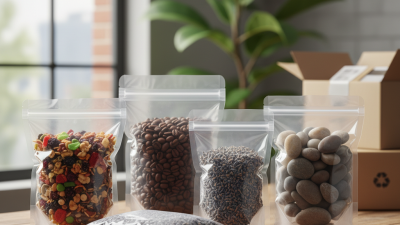
Clear plastic bag suppliers are no longer judged by appearance alone. Buyers now examine film thickness, sealing consistency, material traceability, and production reliability. A glossy surface can hide weak seams or uneven gauges. That matters when a bag carries clothing, food-contact packaging, or small hardware.
Grand View Research estimated the global plastic bags and sacks market at approximately US$12.8 billion in 2023. Its report also projects continued growth through 2030. Smithers’ flexible packaging research identifies e-commerce, lightweighting, and improved barrier performance as important market drivers. These figures provide useful context, but they do not prove that every manufacturer offers equal quality. Report boundaries and product categories differ.
Practical testing remains essential. A serious supplier should provide samples, thickness data, seal-strength results, and clear specifications for resin and additives. Test a filled bag under warehouse conditions. Check the seam after stacking, pulling, and moderate temperature changes. Small defects become expensive quickly.
No ranking is perfect. Yet it can still help.
This guide evaluates China’s top 10 clear plastic bag manufacturers and suppliers through production experience, customization ability, quality control, export service, and responsible material practices. Susan Freinkel, author of Plastic: A Toxic Love Story, wrote, “The problem isn’t plastic itself; it’s the way we use it.” That observation fits this market. A clear plastic bag may support efficient packaging, but its value depends on thoughtful design, suitable use, and responsible end-of-life planning. Suppliers that communicate limitations honestly deserve closer attention than those promising everything.
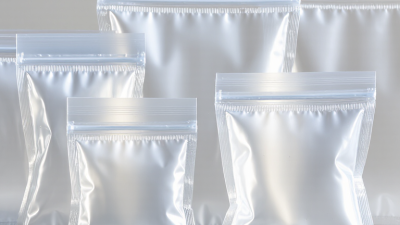
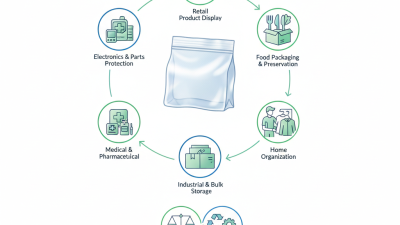
Clear plastic bags are flexible packaging made from transparent polymer film. Common materials include low-density polyethylene, high-density polyethylene, and polypropylene. Their see-through surface lets users inspect contents without opening the package. This helps with product identification, stock checks, and damage detection. Clear bags may have flat bottoms, zip closures, adhesive flaps, or heat-sealed edges. UNEP reports that packaging uses about 40% of global plastic production, showing why bag design deserves careful attention. Clear bags are only one part of this larger category.
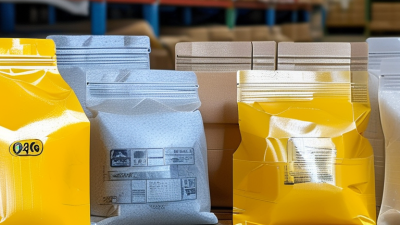
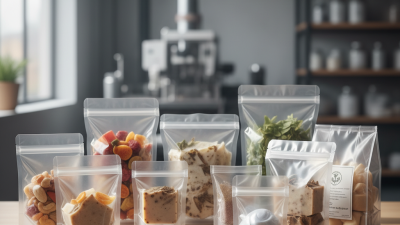
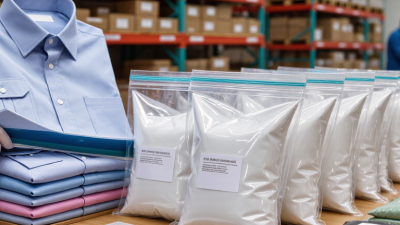
Retailers use them for clothing, stationery, hardware, bakery items, and small household goods. Warehouses often choose thicker film for sharp or heavy products. A 40-micron bag may suit light merchandise, while thicker film offers greater puncture resistance. However, thickness alone does not guarantee performance. Poor sealing, rough handling, or excessive loading can still cause failure. In food-related applications, manufacturers must verify suitable materials, hygiene controls, and migration testing for the intended use.
The OECD’s Global Plastics Outlook states that the world generated 353 million tonnes of plastic waste in 2019. Packaging represented approximately 40% of that waste. This figure includes rigid and flexible formats. Clear film can reduce material use through lightweight construction, but disposal remains complicated. Recycling depends on local collection systems, film compatibility, contamination, and available sorting equipment. A bag that looks recyclable may not be accepted nearby. That gap needs more honest labeling and better supply-chain checks. Industry decisions should consider the full journey, not only the low material weight.
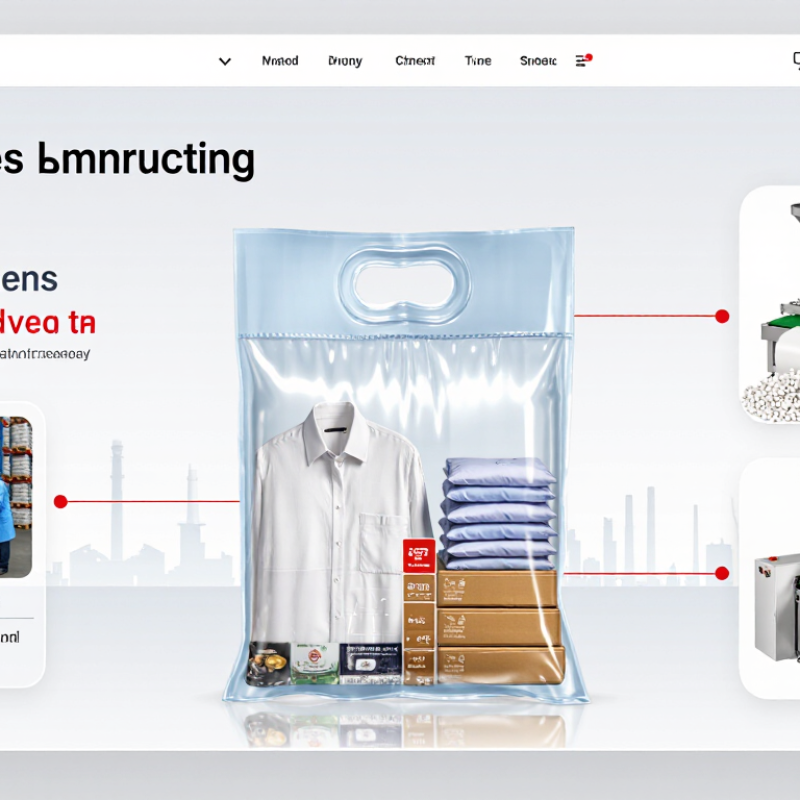
Evaluating China’s clear plastic bag manufacturers requires more than comparing quoted prices. A reliable supplier should explain the bag’s resin type, thickness, dimensions, sealing method, and intended use. Ask for a recent sample, not only product photographs. A clear bag may look smooth while having weak seams or uneven film thickness.
Request production records and quality-control procedures. Check whether workers inspect sealing lines, printing alignment, odor, and surface clarity during production. Independent testing can verify tensile strength, transparency, and material composition. For food-contact or export orders, confirm that the supplier can provide relevant test reports and compliance documents for your destination market. Documents should be current and traceable.
Factory communication also matters. Ask how the supplier handles design changes, damaged cartons, late shipments, and rejected samples. A written specification should list acceptable size and thickness tolerances. Small differences can affect packing efficiency. Visit the facility when possible, or arrange a live video inspection of the film line and warehouse. A polished sample can mislead. I have seen attractive samples hide inconsistent sealing in bulk production. That risk deserves attention. Compare sample results with a pilot order before committing to large quantities. Record every revision, including bag opening size, closure strength, packing count, and carton markings. Clear answers are useful, but verifiable evidence is better.
| No. | Evaluation Dimension | What to Verify | Practical Benchmark or Standard | Suggested Weight | Required Evidence |
|---|---|---|---|---|---|
| 1 | Material and Clarity | Whether the bag is made from LDPE, HDPE, PP, or a multilayer film, and whether the required transparency is consistent. | The material should match the application. LDPE is commonly selected for flexible, transparent bags; HDPE generally provides higher stiffness and a crisp feel. | 12% | Material declaration, technical data sheet, resin information, and approved production sample. |
| 2 | Film Thickness Control | Thickness uniformity across the film and compliance with the agreed tolerance. | The purchase specification should state thickness in microns or mils, the measurement method, and the permitted tolerance. Thickness must be checked at multiple points, not only at one location. | 12% | In-process inspection records, calibrated micrometer records, and a pre-shipment inspection report. |
| 3 | Seal Strength and Leak Resistance | The strength of side, bottom, or zipper seals and the bag’s resistance to leakage during handling. | Testing should use a documented internal method or an applicable ASTM/ISO method. The acceptance limit should be defined according to the product’s intended load and temperature. | 14% | Seal-strength test results, drop or leak-test records, and samples from mass production. |
| 4 | Dimensions and Manufacturing Tolerance | Accuracy of length, width, gusset, opening, handle position, and zipper placement. | The supplier should provide a dimensional drawing with nominal sizes, tolerances, and inspection points before production approval. | 10% | Approved artwork or drawing, first-article inspection report, and final random inspection data. |
| 5 | Regulatory and Food-Contact Compliance | Whether the film, inks, adhesives, and additives comply with the destination market and intended use. | For food-contact applications, request documentation relevant to the destination market, such as FDA requirements for the United States or applicable EU food-contact rules. Compliance must apply to the complete finished article. | 15% | Declaration of compliance, migration-test report, material composition statement, and laboratory accreditation details. |
| 6 | Production Capacity and Lead Time | Actual extrusion, printing, bag-making, and packing capacity rather than quoted trading capacity. | Compare confirmed monthly capacity, equipment availability, normal production lead time, and peak-season contingency plans. Lead time should be stated separately for sampling and mass production. | 10% | Factory audit, production schedule, equipment list, capacity statement, and recent on-time delivery records. |
| 7 | Quality Management System | How the supplier controls incoming materials, production parameters, nonconforming products, and corrective actions. | An ISO 9001-certified quality system is useful evidence, but certification should be verified for scope, site, validity, and issuing body. | 10% | Current certificate, quality manual summary, inspection plan, corrective-action records, and audit results. |
| 8 | Customization and Printing Capability | Ability to produce custom sizes, closures, perforations, gussets, colors, and printed designs. | The supplier should confirm printing process, maximum repeat length, color-control method, artwork requirements, and cylinder or plate charges before ordering. | 8% | Technical capability sheet, color proof, production sample, artwork approval record, and print-inspection results. |
| 9 | Packaging, Shipping, and Export Documents | Whether finished bags are protected from dust, moisture, deformation, and transport damage. | Carton dimensions, net and gross weight, pallet configuration, carton markings, HS classification, and export documents should be confirmed before shipment. | 4% | Packing specification, carton photos, commercial invoice, packing list, and shipping document sample. |
| 10 | Total Cost and Commercial Terms | The complete landed-cost structure, including tooling, printing, packaging, freight, payment terms, and quality claims. | Compare quotations using the same material, thickness, dimensions, quantity, Incoterm, payment term, and testing requirements. The lowest unit price is not necessarily the lowest total cost. | 5% | Formal quotation, cost breakdown, Incoterm, payment terms, sample policy, warranty terms, and written claim procedure. |
| Total Evaluation Weight | 100% | Use documented evidence and approved samples before ranking suppliers. | |||
Note: The benchmarks above are evaluation criteria rather than performance claims about any individual manufacturer. Final supplier rankings should be based on verified documents, factory audits, laboratory reports, production samples, and pre-shipment inspection results.
China’s clear plastic bag industry serves retail, food, apparel, medical, and industrial packaging needs. This guide reviews ten types of leading manufacturers and suppliers in China, based on production capability, material control, customization, and export reliability. A dependable supplier should provide clear film samples, stable sealing, accurate dimensions, and traceable raw materials.
The strongest suppliers usually offer PE, PP, or compostable film options, with thicknesses suited to different applications. They can produce flat bags, zip bags, adhesive bags, drawstring bags, and printed packaging. Factory experience matters. A supplier that understands heat-sealing temperature can reduce weak edges and leakage. Ask for test reports, factory audit records, and sample approval before placing a large order. Small details matter.
Pricing should not be the only measure. Check minimum order quantities, production lead times, packing methods, and communication speed. Some suppliers respond quickly but provide vague technical details. That is a warning sign. Others have impressive machinery yet limited quality documentation. No supplier is perfect, and this review is not absolute. Buyers should still compare samples under real handling conditions, including pulling, folding, and storage. A transparent manufacturer will discuss material limits instead of promising everything. Supplier selection becomes safer when performance, compliance, and service are judged together.
China’s leading clear plastic bag manufacturers and suppliers offer more than standard packaging. Their product ranges often include flat bags, zipper pouches, garment covers, produce bags, courier bags, and heavy-duty storage sacks. Materials may include PE, PP, or compostable alternatives, depending on the application and local requirements. Clear films can be glossy, matte, frosted, or lightly tinted.
Customization is usually the strongest advantage. Buyers can request precise length, width, thickness, opening style, handle design, and sealing method. Some suppliers add perforations, adhesive strips, hang holes, or resealable closures. Printing options may include one-color logos, repeated patterns, warning text, and full-surface artwork. A useful detail is sample approval before mass production. Small size changes can affect fit, material use, and shipping costs.
Quality checks should cover film clarity, thickness tolerance, seal strength, odor, and print adhesion. Ask for production samples, test reports, and factory inspection records. A reliable supplier should explain minimum order quantities, lead times, packaging methods, and replacement policies clearly. Not every attractive sample proves stable production. I would compare several batches, because uneven seals or cloudy film may appear later. Custom packaging works best when specifications are written in millimeters, with photos and measured samples attached.
The chart shows typical commercial thickness levels for commonly supplied clear plastic bag formats. Actual specifications vary according to material, application, load requirement, and customer customization.
Common customization services include bag dimensions, film thickness, opening and closure styles, perforation, transparent or frosted finishes, printed graphics, handle designs, individual packing, carton packing, and export packaging. Typical thickness ranges are approximately 20–40 μm for flat bags, 40–80 μm for zipper bags, 30–50 μm for garment bags, 50–90 μm for courier bags, and 80–120 μm for heavy-duty packaging bags.
When comparing China’s top clear plastic bag manufacturers and suppliers, start with one fixed specification sheet. State bag size, film thickness, material type, closure style, printing needs, and monthly volume. Otherwise, price comparisons become misleading. A thinner film may look cheaper but tear during packing.
Request a written quote from each supplier. Check whether it includes tooling, sampling, packaging, inspection, and shipping terms. Ask for samples from the same production process, not only showroom pieces.
Measure thickness with a gauge and test seals by filling bags with a realistic load. Small details matter. A low unit price can hide weak seams or inconsistent clarity.
Review certification documents carefully. Confirm the certificate holder, scope, expiry date, and testing laboratory. Depending on the product and destination, relevant evidence may include quality-management certification, food-contact testing, or chemical compliance reports. Do not accept a logo alone.
Request batch records and a pre-shipment inspection plan. Delivery comparisons should include sample approval, production time, inspection, port handling, and transport. A supplier promising seven days may exclude several critical stages.
Written milestones are safer than friendly assurances. I have found that the cheapest offer is rarely the lowest total cost after delays, rejected cartons, and repeated testing. Yet quality checks can also become excessive, so match inspection depth with product risk and order value.
Interested in working with our team? Reach out to our team for a no-strings-attached consultation.
1 (833) PPC-FLEX
1111 Busch Pkwy
Buffalo Grove, IL 60089, USA