Thermal paper is everywhere: checkout receipts, delivery labels, parking tickets, and pharmacy instructions. Yet the paper may touch hands for only seconds while releasing chemicals into the environment for much longer. This is why Bpa Free Thermal Printer Paper has become an important purchasing choice for businesses and everyday users.
Traditional thermal paper can use bisphenol A, or BPA, as a color developer. Heat from the printer activates the coating and creates text without ink. Convenient, but not entirely simple. BPA can transfer from receipts to skin, especially with frequent handling, damp fingers, or hand sanitizer. Some businesses now choose Bpa Free Thermal Printer Paper to reduce unnecessary exposure and support safer workplace routines.
Green chemistry expert John Warner has said, “Green chemistry is not about cleaning up pollution; it is about preventing pollution.” His principle fits thermal paper selection well. Choosing a BPA-free product can prevent one avoidable source at the purchasing stage. Still, “BPA-free” does not automatically mean chemical-free. Some papers use BPS, BPF, or other developers, so careful buyers should review technical data sheets and supplier declarations.
Look for clear composition information, stable printing, readable contrast, and reliable paper feed. Test a roll before ordering thousands. Small details matter.
A label can be misleading.
In my view, the best choice balances chemical transparency, print durability, recycling guidance, and actual workplace needs. No product decision is perfect. However, asking better questions creates a more responsible standard for thermal paper.
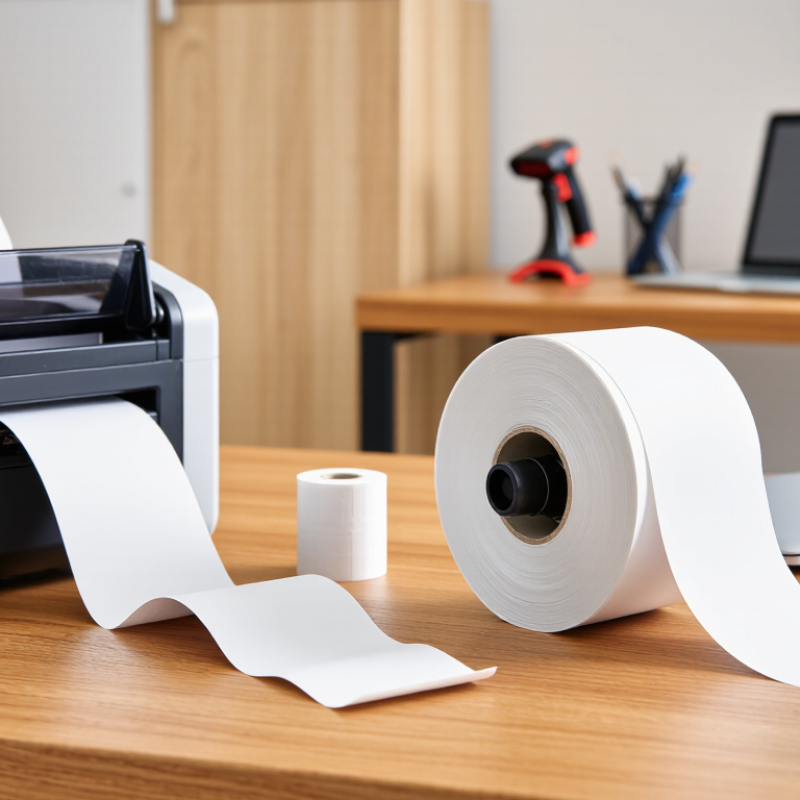
BPA-free thermal printer paper is heat-sensitive paper made without bisphenol A in its coating. Unlike inkjet paper, it develops text when a printer’s heated print head touches the surface. The coating contains a color-forming dye and a developer that react to heat. BPA was used as a developer in some thermal papers, but BPA-free versions use another formulation. No ink is needed. The print appears as dark characters on a pale sheet.
“BPA-free” does not mean chemical-free. Some papers use different developers, so the label alone does not describe every ingredient or settle every safety question. Check the supplier’s product information if you need to know which developer is used. The wording can sound more complete than it is. That deserves a second look.
In daily use, BPA-free paper works much like other thermal rolls: load it, print, and tear off the receipt. It suits checkout counters, shipping labels, and portable printers where replacing ink would slow the task. Keep receipts away from hot dashboards and direct sunlight; thermal images can fade. The paper may feel ordinary, but its coating is doing the work.
| Topic | What It Means | Practical Notes |
|---|---|---|
| Thermal printer paper | Paper with a heat-sensitive coating that produces an image when heated by a compatible thermal printhead. Many thermal printers do not use ink or toner for this process. | The coating’s formulation and the printer’s specifications determine whether a particular roll is suitable. |
| BPA | Bisphenol A is a chemical that has been used as a color developer in some thermal-paper coatings. Heat causes the coating’s components to react and create visible print. | BPA is not required for thermal paper to work; other developers can be used. |
| BPA-free paper | Thermal paper described as BPA-free is made without BPA as an intended ingredient or developer. The exact meaning and verification may depend on the supplier and applicable requirements. | Check the product specification or supporting documentation if a particular definition or test method matters. |
| Possible developers | Alternatives include other chemical developers, such as bisphenol S (BPS), as well as non-bisphenol options. Formulations vary by product. | “BPA-free” does not necessarily mean “BPS-free” or “phenol-free.” Look for those terms separately when relevant. |
| Why choose it? | Choosing paper made without intentionally added BPA can help reduce the use of BPA in one everyday product category. | A BPA-free label alone does not establish that a product is safer in every respect or that it contains no other chemicals of concern. |
| Print performance | Print darkness, image stability, and paper life depend on the coating, printer settings, storage, and exposure to heat, light, moisture, or friction. | Use the paper type and roll dimensions specified for the printer, and store unused rolls in a cool, dry place away from direct sunlight. |
| Choosing a roll | Check the roll width, diameter, core size, paper type, and any required handling or storage conditions. | Confirm both printer compatibility and the specific chemical claim you need, such as BPA-free or phenol-free. |
| Handling receipts | Thermal receipts can transfer small amounts of coating ingredients through contact. The amount and potential exposure depend on the paper and conditions. | As a simple precaution, handle receipts only as needed and wash hands before eating, especially after handling many receipts. |
BPA-free thermal paper creates an image through heat, not ink. Its surface carries a thin coating containing a colorless leuco dye, a developer, and heat-sensitive ingredients. When the printer head warms tiny spots, the coating softens and the dye reacts with the developer. Those spots darken, forming letters, barcodes, or a small receipt total. No ink is involved.
A 2010 study by Biedermann and colleagues in Analytical and Bioanalytical Chemistry measured BPA at roughly 0.8–1.7% by weight in the thermal papers they tested. BPA-free grades replace that developer with another chemistry. In the printer, the basic image-forming process remains similar: heat triggers a color-producing reaction in the coating. The exact formula can vary, so “BPA-free” describes one ingredient’s absence, not every chemical in the paper.
Watch the paper as it prints: dark marks appear only where the heated head touches, while the unheated roll stays pale. That detail explains why print quality depends on coating uniformity and printer temperature. It also hints at a limitation. Two BPA-free papers may behave differently, even in the same machine. A clear ingredient specification is more informative than the label alone.
Thermal printhead heat activates color-forming chemicals in the paper’s coating, creating an image without ink. BPA-free paper is made without bisphenol A as a developer; other developers may be used. The chart shows the process conceptually: the image remains visible after the print area cools.
Schematic state values: 0 = inactive, 1 = active. These are not measured product data.
Thermal paper needs a color developer: heat makes it react with an invisible dye, forming the dark print on a receipt. When manufacturers remove BPA, they may use bisphenol S (BPS), another phenolic developer, or a non-bisphenol alternative. These chemicals are not interchangeable in every coating. They can differ in heat response, print clarity, and handling requirements.
BPS is a common replacement, but “BPA-free” does not mean “chemical-free” or automatically safer. The Danish Environmental Protection Agency’s 2014 assessment of BPA alternatives in thermal paper identified substitute developers and noted gaps in available hazard data. That uncertainty matters. The European Chemicals Agency’s REACH restriction set a maximum BPA concentration of 0.02% by weight in thermal paper, applicable from January 2020. Buyers can ask suppliers for the developer’s chemical identity and supporting safety documentation, rather than relying on a front-label claim. A clean receipt is only part of the picture. Thermal performance still matters, and so does what the coating contains.
BPA-free thermal paper is designed without bisphenol A in its heat-sensitive coating. It prints through heat, so printers need no ink cartridge. For cashiers, shop owners, and customers who handle receipts often, avoiding BPA can reduce one potential source of routine contact. That is a practical benefit. The paper can still produce crisp text and barcodes when matched to a compatible printer. However, “BPA-free” does not mean chemical-free; manufacturers may use other developers, so check product specifications rather than relying on the label alone.
Tips: Store rolls in a cool, dry place, away from direct sunlight and hot dashboards. Heat and friction can darken the paper or make printed details fade. Handle receipts briefly when practical, and wash your hands before eating. Small habits help.
For businesses, choosing BPA-free rolls can support a more considered approach to everyday materials without changing normal printing workflows. Check that the roll width and core fit your printer, then test a sample for legibility and feed performance. A paper that jams or fades quickly creates waste, which partly undercuts the choice. One limitation deserves attention: substitute chemicals vary, and product claims may not explain every ingredient. Ask suppliers for clear material information. The better option is the one that prints reliably and provides transparent composition details.
Choosing BPA-free thermal paper starts with checking the product specification, not just the label. Ask the supplier for written confirmation that the paper does not use bisphenol A as a developer. If chemical composition matters for your workplace, request supporting documentation. “BPA-free” does not necessarily mean that every other coating ingredient is harmless, so avoid treating the label as a complete safety guarantee.
Match the roll to your printer. Check the core size, roll width, diameter, and paper direction before ordering. A roll that is slightly too wide can jam; one with the wrong coating may print faintly. Test a small batch first. Look for clear, dark text after printing, and check that the paper feeds smoothly. It is a small step, but easy to skip.
Store unused rolls in a cool, dry place, away from direct sunlight, heaters, and plasticizers such as some soft PVC materials. Heat and light can fade thermal images. Handle receipts with clean, dry hands, especially before eating, and wash your hands after frequent handling. That is a sensible precaution, not a claim that brief contact is automatically dangerous. Keep a sample receipt and note the storage conditions; print quality can vary more than expected.
Interested in working with our team? Reach out to our team for a no-strings-attached consultation.
1 (833) PPC-FLEX
1111 Busch Pkwy
Buffalo Grove, IL 60089, USA