Polyethylene masterbatch may arrive as a small bag of colored pellets, but its impact is visible across an entire production run. It can affect shade, dispersion, melt flow, and finished-part consistency. For global buyers, choosing a supplier is therefore a technical decision, not just a price comparison. Polymer Pe Masterbatch must match the resin, processing conditions, and final use.
Market figures offer useful context, but not a perfect answer. Grand View Research’s masterbatch market analysis places the sector in the multibillion-dollar range, while forecasts vary by year, geography, and product definition. The OECD’s Global Plastics Outlook also documents the scale of plastics production and waste, reinforcing why buyers increasingly examine material efficiency and supplier transparency. These reports cover broader markets; they should not be mistaken for PE-masterbatch-specific rankings.
Polymer-additives author Dr. Michael T. Tolinski’s technical writing emphasizes that additive performance depends on both formulation and processing. In paraphrase: a well-designed additive must work in the polymer system and under real manufacturing conditions. That is the right test for any supplier shortlist. Ask for technical data, resin compatibility guidance, batch traceability, and samples for trials on your own line. Then compare results. Not brochures alone.
This list is a starting point, not a verdict. Supplier capabilities change, and public claims can be hard to compare. A supplier that performs well in film extrusion may not suit injection-molded parts. The best choice is the one that supports repeatable color, stable processing, and dependable delivery at your plant. That takes evidence—and sometimes a second trial.
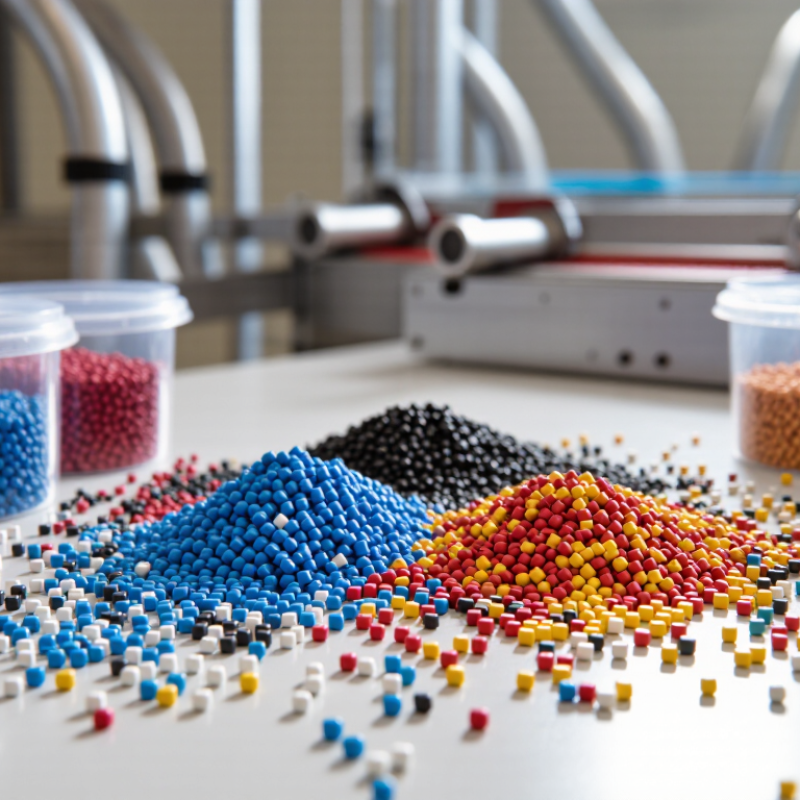
Polyethylene (PE) masterbatch combines concentrated pigments or additives with a carrier resin. Common types include color, black, white, UV-stabilizing, slip, and anti-static grades. The right choice depends on the host resin, processing temperature, and end use. Compatibility matters.
These figures describe plastics overall, not PE masterbatch alone, but they show the scale of the materials market. In practice, PE films often need consistent color and controlled slip; pipes may need long-term UV protection. Injection-molded parts can demand stable pigment dispersion and predictable flow.
Buyers should compare melt-flow compatibility, dispersion quality, moisture control, and recommended let-down ratios. Poor dispersion can leave visible streaks in a thin film. Too much additive may also affect sealing or surface feel.
A supplier’s data sheet helps, but a small production trial is still useful. One caveat: matching a specification on paper does not guarantee the same result on every line. Temperature, screw design, and operator settings matter. No single formula wins.
413.8 million tonnes Global plastics production reached 413.8 million tonnes in 2023, according to PlasticsEurope’s Plastics—The Fast Facts 2024. That scale makes supplier qualification more than a price check. Ask for a current technical data sheet, safety data sheet, and lot-specific certificate of analysis. Check pigment or additive loading, melt flow, carrier resin, and recommended dosage. The carrier should suit your PE grade and processing conditions. Small mismatches can show up as streaks in a blown-film roll or uneven color across molded parts.
Request samples from more than one production lot, then run them on your own equipment. Record dosage, screw speed, melt temperature, and color difference. Ask suppliers how they control dispersion and batch variation, and how quickly they can provide replacement material. Review lead times, minimum order quantities, packaging, and shipment documents before approving a source. A polished specification sheet is useful, but it cannot prove performance on your line. A spreadsheet can miss practical issues, too.
Tips: Set acceptance limits before testing. Keep sealed retain samples from approved lots. Verify claims with trial data, not just sales promises. This is a sensible baseline, not a universal rule; your application may need tighter controls.
The following ten supplier profiles describe useful capabilities, not endorsements. A color-focused producer may offer custom shades and tight batch matching. Ask for molded plaques under your own lighting. A black masterbatch specialist should explain carbon-black dispersion and filtration. Poor dispersion can leave visible specks. A white masterbatch supplier should disclose titanium dioxide loading and carrier compatibility. A recycled-content specialist may help manage color variation, though consistency can be harder. A UV-focused supplier should provide dosage guidance for the intended outdoor exposure.
A processing-aid producer may help reduce die build-up in film lines. Confirm trials on your resin and equipment. A packaging specialist often understands thin-film requirements and food-contact documentation. A pipe-grade supplier should discuss long-term performance testing, not just appearance. A regional compounder may offer shorter lead times and smaller orders. A large-volume producer may provide broader technical support and steadier capacity. A custom-formulation supplier can tailor carrier and additive packages, but development may take time. The shortlist is imperfect; capabilities vary by plant and grade.
Tips: Request a technical data sheet, safety data sheet, and recent batch certificate. Test a small sample in your actual process. Check dispersion, dosing accuracy, color shift, and pellet flow. Ask how the supplier handles rejected batches and formulation changes. Small samples matter. Don’t rely on a bright sample alone; production conditions can expose weaknesses.
| Profile | Typical PE Masterbatch Range | Common Applications | Useful Supplier Capabilities | Buyer Checks |
|---|---|---|---|---|
| 01 — General-purpose color specialist | Single-color and custom-color concentrates using PE-compatible carriers | Films, bags, containers, household products, and molded parts | Color matching, repeatable shade control, and options for different processing methods | Request a sample, color tolerance, carrier-resin details, and processing recommendations |
| 02 — Black masterbatch specialist | Carbon-black concentrates for PE film, pipe, cable, and molded applications | Agricultural film, refuse bags, geomembranes, pipes, and cable sheathing | Dispersion control and grades designed for the intended end use | Check carbon-black content, dispersion, required UV performance, and applicable end-use standards |
| 03 — White masterbatch specialist | Titanium-dioxide-based white concentrates in PE-compatible carriers | Packaging film, sheets, containers, and opaque molded products | Multiple opacity and processing options; documented pigment and carrier information | Confirm TiO₂ content, opacity target, food-contact suitability where relevant, and film compatibility |
| 04 — Filler masterbatch producer | Mineral-filled PE concentrates, commonly based on calcium carbonate | Shopping bags, packaging film, sheets, and selected injection-molded products | Different filler levels and particle treatments for specified applications | Verify mineral content, moisture control, mechanical-property impact, and recommended let-down ratio |
| 05 — UV and weathering additive specialist | UV-stabilizer concentrates formulated for PE products exposed to sunlight or outdoor conditions | Agricultural film, outdoor covers, PE pipes, and other exterior products | Advice on stabilizer selection for product thickness, exposure, and service conditions | Define expected exposure and service life; request relevant test data rather than relying on generic claims |
| 06 — Film-processing additive specialist | PE concentrates with additives such as slip or anti-block agents | Blown and cast film, packaging film, and bag production | Grades tailored to film structure and processing requirements | Check additive type, migration or food-contact requirements, coefficient-of-friction targets, and aging behavior |
| 07 — Antistatic masterbatch specialist | Antistatic additive concentrates compatible with selected PE processing applications | Packaging, liners, bags, and products where static control is needed | Guidance on additive choice, dosage, and expected performance conditions | Clarify whether surface or permanent performance is required and test under the actual humidity and use conditions |
| 08 — Pipe and cable compound specialist | PE color and additive concentrates intended for pipe or cable manufacturing | Water and gas pipe systems, conduit, and cable sheathing | Product-specific technical documentation and processing support | Verify compatibility with the base resin and applicable customer, regulatory, and industry specifications |
| 09 — Custom formulation and color-matching supplier | Made-to-order PE concentrates combining color, additives, or functional requirements | Branded packaging, specialty film, consumer goods, and custom molded products | Laboratory matching, trial batches, and documented formulation control | Agree on color reference, approval method, tolerances, minimum order, lead time, and change-control procedures |
| 10 — Export-oriented multi-product supplier | A broad catalog of PE-compatible color, black, white, filler, and additive concentrates | Packaging, agriculture, construction, household goods, and general plastics processing | Export documentation, consistent packaging, technical data sheets, and shipment coordination | Review batch traceability, certificates, sample consistency, packaging requirements, and delivery terms |
Note: These are anonymous capability-based supplier profiles, not verified profiles or rankings of named companies. Product ranges and performance vary by formulation; confirm specifications, compliance, samples, and test results directly with each supplier.
Global buyers comparing polymer PE masterbatch suppliers should look beyond shade cards and price sheets. Product range matters: black, white, color, and additive concentrates may serve different film, pipe, or molding needs. Check carrier resin, pigment loading, dispersion data, and recommended let-down ratios. A supplier may list many grades yet offer limited technical support for a specific process. That gap matters.
Tips: Request current technical data sheets, safety data sheets, and certificates relevant to your intended market. Confirm that certifications cover the manufacturing site and product scope, not just the company’s general quality system. Ask for a trial lot. Compare color strength, moisture, and filter pressure on your own production line. Small tests help.
Export capability means more than shipping internationally. Ask about lead times, minimum order quantities, packaging options, pallet protection, and batch traceability. Request sample export documents before placing a large order, and clarify who handles freight and customs paperwork. Response speed is useful evidence, though it does not prove consistent quality. Some details may remain unclear until an order is underway. That is worth considering.
Selecting a polymer PE masterbatch supplier starts with your production conditions, not a catalogue claim. Define the carrier resin, pigment or additive, target let-down ratio, and processing temperature. A film line and an injection-moulding cell may need different dispersion and flow characteristics. Ask for a technical data sheet, safety information, and a sample lot that matches the grade you intend to purchase. Check that the supplier can explain test methods and keep specifications consistent between batches.
Tips: Test on your own line. Record screw speed, melt temperature, dosing rate, and visible defects. A small trial can reveal feeding problems that a colour chip will not show. Also ask about minimum order quantities, lead times, packaging, and how the supplier handles a delayed shipment. These details affect production planning.
Review quality controls before committing to regular orders. Ask how incoming raw materials are checked, how batches are identified, and whether retained samples are available for investigation. Compare colour strength, moisture, dispersion, and pellet appearance under the same conditions. Keep a written trial record, even if the first result looks good. It is easy to overlook a slight change in surface finish or filtration pressure. I would not treat one successful run as proof of long-term consistency; repeat testing across more than one batch before scaling up.
Interested in working with our team? Reach out to our team for a no-strings-attached consultation.
1 (833) PPC-FLEX
1111 Busch Pkwy
Buffalo Grove, IL 60089, USA