Choosing the best Industrial Vacuum Packaging Machine is not simply a matter of speed, price, or stainless-steel appearance. The right decision depends on product moisture, package size, film type, production volume, cleaning routines, and available floor space. A machine that performs perfectly with dry meat may struggle with soups, sauces, or fragile bakery products. Small details matter. Seal temperature, vacuum depth, pump capacity, and chamber design can change daily output.
Industry data supports this careful approach. PMMI’s packaging machinery reports identify automation, labor efficiency, flexible formats, and improved uptime as major investment drivers. Grand View Research’s Vacuum Packaging Market analysis also highlights food processing as the dominant application, supported by demand for longer shelf life and reduced product waste. These reports provide useful direction, but they cannot select a machine for every factory. Real production trials still matter.
Food-safety expert Dr. Ben Chapman states, “Vacuum packaging is not a substitute for refrigeration.” That warning should remain central when comparing equipment. Better vacuum performance does not remove the need for validated temperatures, hygienic design, and documented operating procedures. No machine wins everywhere. A compact tabletop unit may suit a small processor, while a double-chamber or automatic belt machine may serve a high-volume plant better. Buyers should question impressive cycle-time claims, because testing conditions often differ from factory reality. The most reliable choice balances measurable output, service support, operator experience, energy use, and product protection. It may not be the cheapest machine, and it may not be the fastest. It should be the one that performs consistently on your actual products.
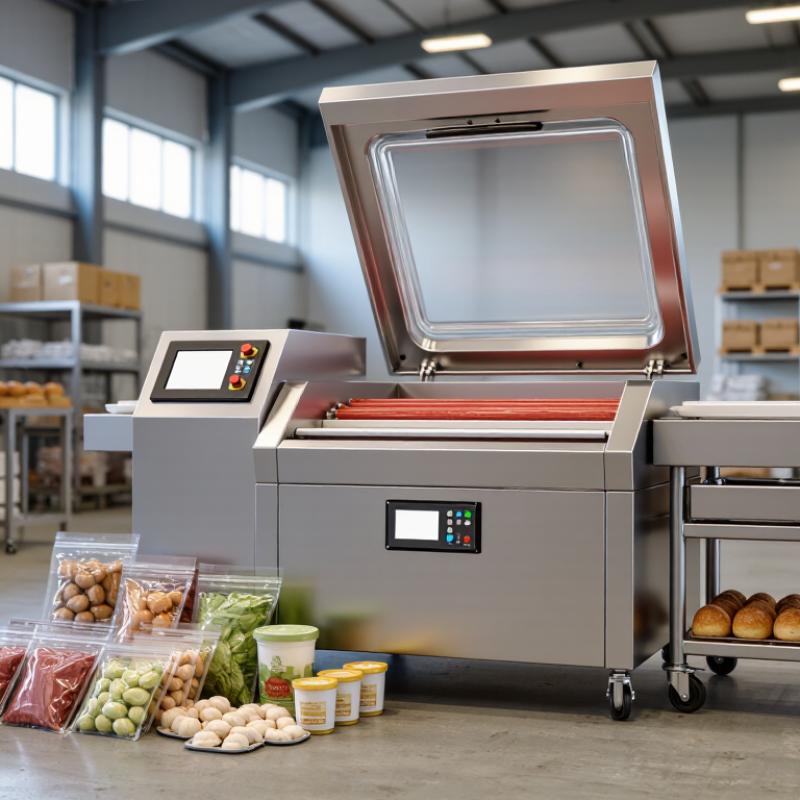
Industrial vacuum packaging machines differ by product shape, production speed, and required sealing strength. Chamber machines remove air inside a sealed chamber. They suit meat, seafood, cheese, powders, and prepared foods in bags. Double-chamber models improve output because operators can load one chamber while the other seals. They are practical for medium-sized factories with changing product batches.
External nozzle machines work well with large bags, bulky parts, and irregular items. They usually need less floor space, but their vacuum control can be less consistent with wet products. Thermoforming machines create packaging from a film roll, vacuum the product, and seal it continuously. They fit high-volume food lines where portion size and appearance must remain uniform. Rotary belt machines support faster loading and may handle heavy, frequent production better than basic chamber units.
Tray-sealing vacuum systems protect sliced foods and ready-to-cook meals in rigid containers. Their value comes from clean presentation and reduced package movement during transport. In equipment selection, I would check pump capacity, seal width, film compatibility, cleaning access, and spare-part availability. A powerful pump is not always the best choice. Excessive vacuum can crush delicate food or deform thin containers. Operators also need simple controls and clear pressure readings. Small details matter.
A real production test should include the actual product, moisture level, bag material, and target cycle time. Catalog figures can look impressive. They may not match factory conditions.
Which China Industrial Vacuum Packaging Machine Is Best?
Key Features to Compare in China-Made Vacuum Packaging Machines
Choosing an industrial vacuum packaging machine starts with the product, not the price. Compare chamber size, sealing length, and daily output against your actual workflow. A wide seal suits larger bags, while double sealing can improve consistency during busy shifts. Check the pump’s vacuum level and recovery speed. A strong pump reduces cycle time, but oversized pumps may increase energy use and maintenance costs.
Material quality matters. Look for food-contact stainless steel, smooth welds, and removable parts around the seal area. These details make cleaning easier and reduce residue buildup. Digital controls should display vacuum time, sealing temperature, and cooling time clearly. Operators need repeatable settings. Simple controls help.
Ask for test samples using your real bag material. Laboratory claims can look impressive, yet factory results may differ. Review electrical compatibility, emergency stops, guard design, and documented safety testing. Reliable suppliers should provide manuals, spare-part lists, wiring information, and responsive technical support. Some machines appear affordable until replacement seals and service delays are included.
I have seen teams focus too heavily on maximum vacuum figures. That choice was not always practical. A stable seal often matters more than the lowest pressure reading. No machine is perfect. Before ordering, inspect a running unit, measure its cycle time, and question any specification that lacks test conditions. A careful comparison usually reveals the better long-term fit.
Which China Industrial Vacuum Packaging Machine Is Best?
Machine performance should be judged under production conditions, not from a showroom vacuum reading. In factory trials, I check vacuum stability, sealing temperature, cycle time, and residual oxygen. A higher vacuum level is not automatically better. Delicate products may deform, while oily items can weaken the seal. Run at least 30 repeated cycles with the intended film and product load. Record failed seals, pressure recovery, and temperature changes. The 2024 PMMI State of the Industry report highlights automation and labor efficiency as major packaging equipment investment priorities. Consistent cycles often matter more than impressive maximum specifications.
Materials and build quality deserve equal attention. A stainless-steel chamber should have smooth welds, firm hinges, and no sharp internal corners. Check whether the sealing bar distributes heat evenly across its full width. Film compatibility matters too, especially with multilayer barrier materials. UNEP’s Food Waste Index 2024 reports 1.05 billion tonnes of food waste in 2022. Better packaging cannot solve waste alone, but weak seals can increase avoidable losses. I would also inspect pump oil access, gasket replacement, electrical protection, and control-panel clarity. One overlooked detail can become a daily maintenance problem.
Tips: Ask for a filmed factory test using your real product. Request three performance records, not one sample. Leave room for doubt; supplier data may omit warm-up time, operator skill, or maintenance delays.
Selecting the right machine starts with the product, not the catalog photo. In practical testing, moisture, shape, and surface texture affect vacuum performance. A chamber machine suits meat, seafood, powders, and irregular products. External suction models fit lighter workloads and smaller bags. For liquid-rich products, a sloped chamber and controlled vacuum cycle can reduce spills. Do not ignore bag thickness. Thin film may wrinkle or leak near the seal.
Capacity changes the decision quickly. A small processor may need 10 to 20 cycles per minute, while a central packing line may require continuous operation. Measure the product length, width, and height before choosing the seal bar. Leave working space around the bag. It matters. A pump rated for high airflow can shorten cycle time, but a larger pump is not automatically better. Poor piping, weak cooling, or an unsuitable chamber can waste that power.
Reliable selection also depends on construction and service details. Stainless steel contact surfaces simplify cleaning and support longer use in demanding environments. Check seal temperature control, vacuum stability, oil filtration, emergency stopping, and replacement-part access. Ask for test samples using your actual product and packaging film. I have seen machines perform well with empty bags but struggle with sharp frozen edges. That result is useful, though inconvenient. Record cycle time, residual air, seal strength, noise, and operator effort during the trial. A machine that looks fast may become tiring after eight hours.
Which China Industrial Vacuum Packaging Machine Is Best?
Choosing the best industrial vacuum packaging machine starts with supplier verification, not attractive product photos. Request the business license, factory address, ownership details, and export experience. A factory audit should confirm production lines, weld quality, electrical testing, and worker training. Ask for dated videos, sample invoices, and references from buyers with similar workloads. Video calls help, but they are not proof. A small mismatch between the showroom and workshop can signal future problems.
Certification must match both the machine and your destination market. Verify certificate numbers through the issuing organization’s database. Check electrical safety, food-contact materials, sealing performance, and emergency-stop testing. Request recent test reports for the exact model, not a similar machine. A certificate copied into a brochure proves little. Paperwork can look perfect. I would still ask technical questions.
Compare total ownership cost, not only the unit price. List chamber size, pump capacity, seal width, steel grade, controls, spare parts, packaging, freight, and taxes. A low quote may hide weak pumps or expensive replacement parts. Confirm warranty length, response times, remote diagnosis, parts availability, and technician access. Put these terms in the contract. Before final payment, run an acceptance test using your actual bag material and product size. Some suppliers promise fast support, yet language gaps and time zones may delay repairs. Leave room for uncertainty; no supplier can guarantee zero downtime.
Comparison framework based on machine configuration, commonly requested compliance documents, indicative market pricing, and practical supplier due-diligence requirements.
| Machine Type | Best-Fit Applications | Typical Technical Profile | Indicative Export Price (USD) | Certification and Compliance Checks | Supplier Verification Evidence | Recommended After-Sales Support |
|---|---|---|---|---|---|---|
| Single-Chamber Tabletop | Small food processors, restaurants, laboratories, and low-volume spare-parts packaging. |
| $600–$1,800 Usually excludes freight, taxes, tooling, and optional gas flushing. |
|
|
|
| Double-Chamber Floor Model | Medium-volume meat, seafood, produce, cheese, hardware, and general industrial packaging. |
| $1,500–$5,500 Price varies with pump capacity, chamber size, and sealing configuration. |
|
|
|
| Automatic Belt-Type Vacuum Sealer | Continuous production lines for cooked food, frozen products, snacks, agricultural goods, and industrial parts. |
| $4,000–$15,000 Line integration, gas systems, printers, and conveyors can substantially increase the total cost. |
|
|
|
| Thermoforming Vacuum Packaging Line | High-volume sliced meat, cheese, ready meals, medical products, and standardized retail packs. |
| $30,000–$150,000+ Tooling, automation, output rate, gas flushing, and inspection systems drive the final quotation. |
|
|
|
| External-Suction Vacuum Sealer | Large bags, irregular products, textiles, machinery components, and low-to-medium volume industrial packaging. |
| $700–$4,000 Heavy-duty stainless-steel construction and wider sealing bars increase the price. |
|
|
|
| Heavy-Duty Industrial Chamber | Metal parts, powders, chemicals, bulk components, and demanding non-food industrial environments. |
| $6,000–$35,000+ Custom chamber dimensions, pump capacity, automation, and materials can change the price considerably. |
|
|
|
Buying guidance: The best option is determined by product size, required throughput, bag material, target residual oxygen or vacuum level, sealing width, available utilities, and destination-market compliance. Treat all prices as indicative reference ranges only; obtain a formal quotation after confirming specifications, Incoterms, packaging, shipping, taxes, installation, spare parts, and warranty terms.
Interested in working with our team? Reach out to our team for a no-strings-attached consultation.
1 (833) PPC-FLEX
1111 Busch Pkwy
Buffalo Grove, IL 60089, USA